Wine Guide
Tignanello 2023 Review: Tasting Notes, Verdict and Price
Our Tignanello 2023 review: Antinori's Super Tuscan of Sangiovese and Cabernet. Tasting notes, drinking window, food pairings and where to buy it.
 By Leandro ScarpattiPublished on
Advertising: this article contains links to online shops that may be affiliate links. If you buy through them, we may earn a commission, at no extra cost to you. How we work with retailers
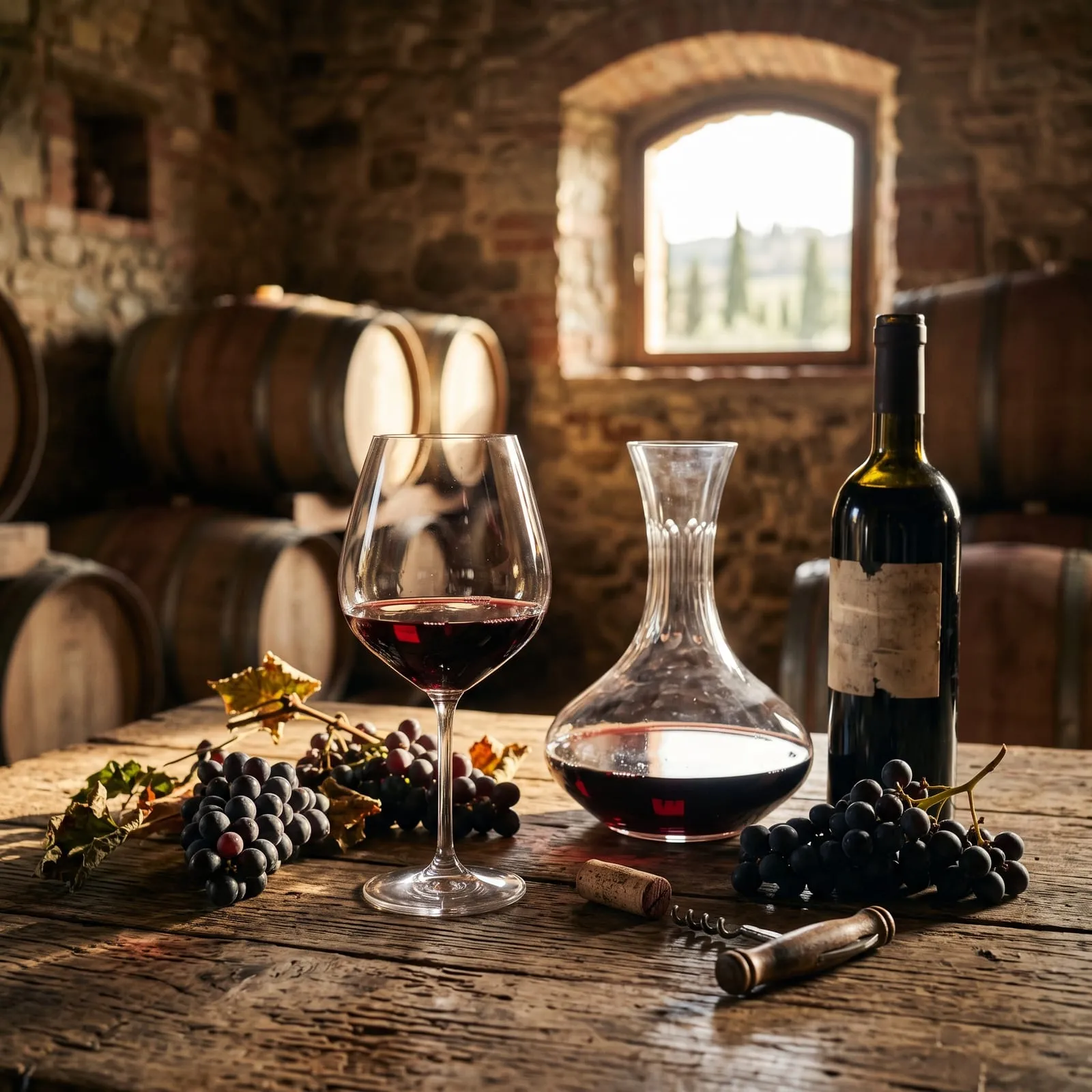
The short answer: Tignanello 2023 is a polished, age-worthy Super Tuscan made mainly from Sangiovese with a small share of Cabernet Sauvignon and Cabernet Franc. Expect ripe cherry, pomegranate and blood orange, silky tannins and a long, savoury finish. It cost around €140 a bottle on Vino.com in October 2026 and will reward a few years in the cellar.
Tignanello is the wine that helped define the “Super Tuscan” category. It comes from the Antinori family’s Tignanello estate, in the heart of the Chianti Classico zone.
Here is what the 2023 is like, how long it will keep and whether it deserves a place in your cellar.
What Tignanello is
Antinori first released Tignanello in the early 1970s. It was the first Sangiovese aged in small oak barrels and one of the first Tuscan reds blended with Cabernet instead of the traditional white grapes.
Those choices broke the Chianti rules of the time. So the wine was sold as a humble table wine, despite its ambitions. Today it carries the Toscana IGT designation.
It comes from a single vineyard of 77 hectares at 350–400 metres, facing southwest, on limestone-rich soils of alberese and galestro. Antinori only bottles it in good years: there was no Tignanello in 1972–1974, 1976, 1984, 1992 or 2002.
| Feature | Tignanello 2023 |
|---|---|
| Producer | Marchesi Antinori |
| Designation | Toscana IGT |
| Grapes | Mainly Sangiovese, with a small share of Cabernet Sauvignon and Cabernet Franc |
| Alcohol | 14.5% |
| Oak | 13 months in barriques, mostly new French oak with some Hungarian |
| Bottle ageing | 12 months before release |
| Drinking window | Roughly 2028–2045 (our estimate) |
| Serving temperature | 18–20 °C, decanted |
| Price | About €140 on Vino.com (October 2026) |
The 2023 vintage
According to Antinori, 2023 began with a cold, dry winter, followed by a cool and rainy spring that lasted from late April to mid-June. The summer was hot and dry but without extreme heat spikes, and some rain in August helped the grapes ripen evenly.
Harvest started around 20 September with the Sangiovese and finished in the first half of October with the Cabernets. The rainy spring meant extra work in the vineyard and strict sorting in the cellar, which is where the vintage was won.
The result, on paper, is a fresh, precise year rather than a heavy one. Antonio Galloni gave the 2023 95/100.
Tasting notes
These notes follow Antinori’s technical sheet for the 2023 and the description on Vino.com, which agree closely.
Appearance: intense ruby red.
Nose: ripe cherry, pomegranate and orange, then hibiscus and violet. Behind the fruit come cocoa, graphite (pencil lead), white pepper and red currant.
Palate: a precise, vibrant entry and a juicy, mouth-filling middle. The tannins are silky and supple, and the long, savoury finish brings blood orange and toasted hazelnut.
The Cabernet adds structure and depth, but this still reads as a Tuscan wine first: the acidity and the cherry fruit are pure Sangiovese.
Tignanello 2023 vs a Chianti Classico from the same house
The fairest comparison is Antinori’s own Pèppoli, a Chianti Classico DOCG from vineyards near the Tignanello estate. Same family, same hills, two very different ambitions.
| Pros | Cons |
|---|---|
| Pros: Layered cherry, pomegranate, blood orange and spice | Cons: Expensive: around €140 a bottle (October 2026) |
| Pros: Silky tannins and a long, savoury finish | Cons: Very young: needs decanting if opened now |
| Pros: Built to age well into the 2040s | Cons: Barrique and Cabernet make it less "classic" than a pure Sangiovese |
| Pros | Cons |
|---|---|
| Pros: Fresh red cherry and violet, very easy with food | Cons: Far less depth, length and complexity |
| Pros: Ready to drink on release, no decanting needed | Cons: Best within a few years, not for long cellaring |
| Pros: Excellent value, in the € price tier | Cons: Lacks the prestige for a special occasion or a gift |
Food pairings
Tignanello wants protein and some fat to meet its tannins. Classic matches are bistecca alla fiorentina, roast lamb, braised beef, game and wild boar pappardelle.
Aged cheeses work well too: Parmigiano Reggiano or a mature pecorino. Dishes with mushrooms or truffle bring out its earthier side. Avoid delicate fish and very spicy food, which flatten the fruit.
Our verdict
Tignanello 2023 is a textbook Super Tuscan from a fresh, carefully managed vintage: ripe yet vibrant, polished yet unmistakably Tuscan. The critics’ early scores and the producer’s notes point to a classic, long-lived Tignanello.
Buy it if you can cellar it for a few years or want a prestige bottle for a celebration. If you plan to drink it now, decant it for at least an hour and serve it in a large glass.
Our recommendations
Two bottles from Antinori: the Tignanello 2023 itself, and its everyday “little brother” from the same corner of Chianti Classico.
Shop links may earn us a commission at no extra cost to you.
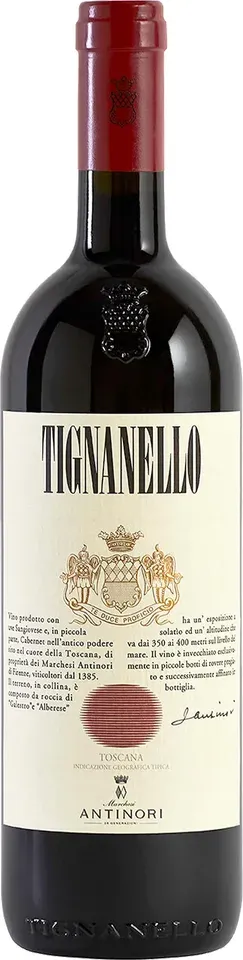
Antinori Tignanello Toscana IGT 2023
Region: Chianti Classico area, Tuscany
Tasting notes
- Ripe cherry and pomegranate
- Cocoa and graphite
- Silky tannins
- Long, savoury finish
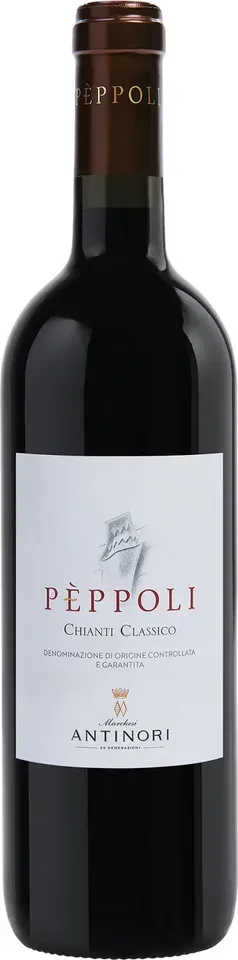
Antinori Pèppoli Chianti Classico DOCG 2025
Region: Chianti Classico, Tuscany
Tasting notes
- Red cherry
- Violet
- Fresh acidity
- Supple tannins
Conclusion
Tignanello is still the reference point for Sangiovese-based Super Tuscans, and the 2023 shows why. It combines ripe fruit, Tuscan freshness and a structure that will reward patience.
It is not cheap, and it is not a weeknight wine. But for a cellar or a special dinner, few Tuscan reds offer this mix of history, consistency and pleasure.
Frequently asked questions
Is Tignanello 2023 ready to drink now?
It is approachable on release, especially after an hour or two in a decanter, but it is a young wine built for the cellar. In our view it starts to show its best from around 2028 and should keep improving for well over a decade if stored in a cool, dark place.
Why is Tignanello a Toscana IGT and not a Chianti Classico?
When Antinori created Tignanello in the early 1970s, it broke the Chianti rules of the time by leaving out white grapes, ageing in small barriques and later adding Cabernet. It was released as a simple table wine, and today it carries the more flexible Toscana IGT label rather than the Chianti Classico DOCG.
Is Tignanello worth the price?
If you want a benchmark Super Tuscan with a long track record and real ageing potential, yes. If you mainly want a well-made Antinori Sangiovese for tonight, a Chianti Classico such as Pèppoli gives you the house style for about a tenth of the price.
How we put this article together
We have not tasted every bottle we mention. Tasting notes and scores come from the sources we name: the producer's technical sheet, the retailer's listing or a critic, always credited.
Prices are indicative. In our tables, € means up to about €25, €€ about €25–50 and €€€ above €50, based on what these wines typically cost in European shops. When a review quotes a price, it is the price we saw on the retailer's page on the date shown. Check the current price and availability before you buy.
Shop links may earn us a commission at no extra cost to you. No retailer pays to be included, and a commission never decides what we recommend. How we work with retailers