Wine Guide
Bellavista Alma Assemblage Review: Franciacorta's Answer to Champagne?
Our Bellavista Alma Assemblage 3 Extra Brut review: how it is made, tasting notes, the Falstaff score, food pairings and how it compares with Ca' del Bosco.
 By Leandro ScarpattiPublished on
Advertising: this article contains links to online shops that may be affiliate links. If you buy through them, we may earn a commission, at no extra cost to you. How we work with retailers
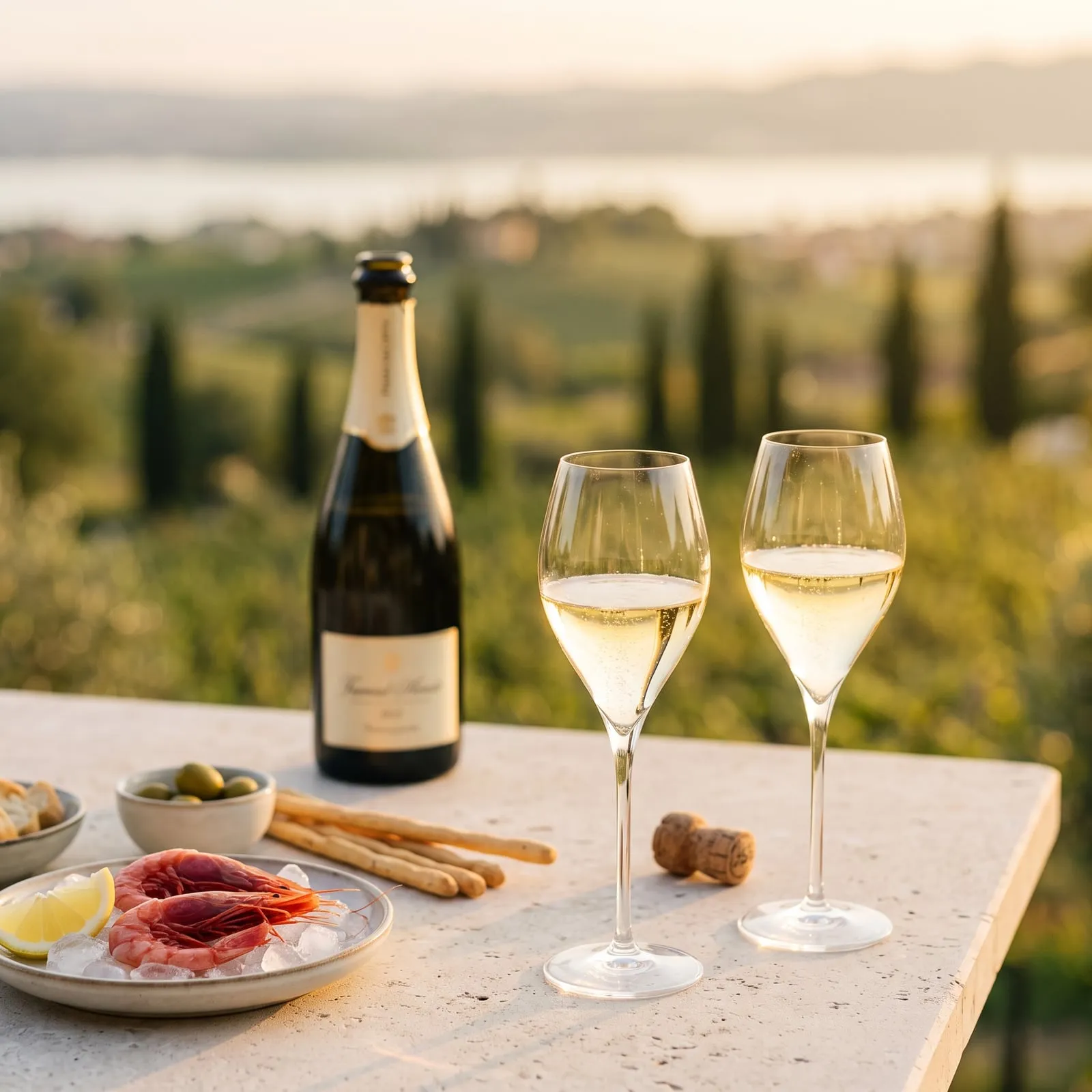
The short answer: Bellavista Alma Assemblage 3 is an elegant Extra Brut Franciacorta from Chardonnay, Pinot Noir and a touch of Pinot Blanc, with citrus, Mediterranean flowers and a dry, mineral finish. Falstaff gave it 94 points. At about €29 on Vino.com in October 2026, it is one of the best-value Italian sparkling wines made by the Champagne method.
Alma is the flagship non-vintage wine of Bellavista, one of the houses that made Franciacorta famous. In recent years it has changed its name, its style and its team: what used to be the “Alma Gran Cuvée Brut” is now a numbered Extra Brut edition.
We have not tasted this bottle for this review. The tasting notes below come from Falstaff, from the producer and from Vino.com, and every score is attributed by name. Here is what the new Alma is and whether it is worth buying.
Bellavista and the new Alma
Bellavista was founded in 1977 by Vittorio Moretti, a construction entrepreneur, on the Bellavista hill in Erbusco, in the province of Brescia. It is still owned by the Moretti family and leads the Terra Moretti wine group.
The estate covers about 200 hectares of vineyards. For forty years, from 1981 to 2021, the wines were made by oenologist Mattia Vezzola. Since 2021 the cellar has been led by Francesca Moretti, the founder’s daughter, with Richard Geoffroy, the former cellar master of Dom Pérignon, as consultant.
With them, Alma became an “edition”: every year a new blend, a new number. The producer says the blend draws on more than 100 base wines from vineyards across the estate. Every bottle is still riddled by hand.
| Feature | Bellavista Alma Assemblage 3 |
|---|---|
| Producer | Bellavista, Erbusco (Lombardy) |
| Designation | Franciacorta DOCG Extra Brut |
| Grapes | Chardonnay, Pinot Noir, Pinot Blanc |
| Base wines | More than 100 (producer) |
| Oak | Part of the base wines matured in oak |
| Time on the lees | About 30 months (Vino.com) |
| Alcohol | 12.5% |
| Drinking window | Now to about 2029 (our estimate) |
| Serving temperature | 8–10 °C |
| Price | About €29 on Vino.com (October 2026) |
What we know about Assemblage 3
In October 2026 the producer had not yet published a technical sheet for Assemblage 3, so we cannot give its exact blend, dosage or share of reserve wines. We prefer to say so rather than guess.
The previous edition gives an idea of the style. According to Bellavista’s sheet for Assemblage 2, based on the 2022 harvest, the blend was 86% Chardonnay, 13% Pinot Noir and 1% Pinot Blanc. About 19% of the base wines matured in wood, reserve wines from older vintages were added, the wine spent around 30 months on the lees and the dosage was just 2 g/l.
Those 30 months are well above the 18 months that Franciacorta rules require for a non-vintage wine, and equal to the minimum for a vintage Franciacorta.
Tasting notes
Falstaff (Othmar Kiem and Simon Staffler, tasted in October 2026): bright straw yellow with golden highlights. Very inviting and fresh on the nose, with lemon zest, a hint of stone fruit, brioche and a touch of chamomile. On the palate, fine bubbles, lively acidity and plenty of body; very harmonious, with a juicy, long finish.
Vino.com describes a bright yellow colour with a fine, persistent bead, a refined bouquet of Mediterranean flowers and clear citrus notes, a dynamic palate and a deep, dry, mineral finish.
The two descriptions agree on the main points: freshness, citrus, a touch of brioche from the time on the lees, and a dry finish.
What the critics say
Falstaff scored Alma Assemblage 3 Extra Brut 94/100 in its Wine Guide Italy 2027. We did not find scores for this edition from other critics yet.
On Vino.com the wine had a 4.8 out of 5 rating, but from only four customers, so it is too early to read much into it.
Bellavista Alma vs Ca’ del Bosco Cuvée Prestige
Bellavista’s historic neighbour and rival in Erbusco is Ca’ del Bosco, whose Cuvée Prestige is the other great reference for non-vintage Franciacorta. Both are Extra Brut blends of Chardonnay, Pinot Noir and Pinot Blanc.
| Pros | Cons |
|---|---|
| Pros: Fresh citrus, flowers, brioche and a dry, mineral finish | Cons: No technical sheet for this edition yet |
| Pros: Falstaff 94/100 for this edition | Cons: Very dry style: not for those who like a softer Brut |
| Pros: About €29 in October 2026, cheaper than its main rival | Cons: Few customer reviews so far |
| Pros | Cons |
|---|---|
| Pros: Peach, citrus and almond (Vino.com) | Cons: About €35 in October 2026, roughly €6 more |
| Pros: Blend enriched with reserve wines | Cons: Also an edition-based blend that changes each year |
| Pros: A benchmark Franciacorta, easy to find | Cons: Less of a "discovery" for Franciacorta fans |
Food pairings
The producer gives no pairings for this edition. Vino.com suggests it as an aperitif and with delicate seafood, shellfish, fish dishes, seafood starters, carpaccio and fresh cheeses.
In Lombardy, a glass of Franciacorta often goes with fried lake fish, risotto or a plate of salami before dinner. Its dryness also makes it a good match for oysters and raw fish.
Serve it at 8–10 °C in a tulip glass, and do not over-chill it, or the aromas will close up.
Our verdict
Bellavista Alma Assemblage 3 shows where Franciacorta is going: drier, more precise and built on a large library of base wines. The 94 points from Falstaff and the producer’s work with Richard Geoffroy make this one of the most interesting editions of Alma so far.
At about €29 (October 2026), it costs less than most Champagnes of similar quality on Vino.com. Buy it if you want an Italian sparkling wine for a special aperitif, a seafood dinner or a gift that shows you know your wine.
Our recommendations
The Alma Assemblage 3 itself, and its great rival from Ca’ del Bosco.
Shop links may earn us a commission at no extra cost to you.
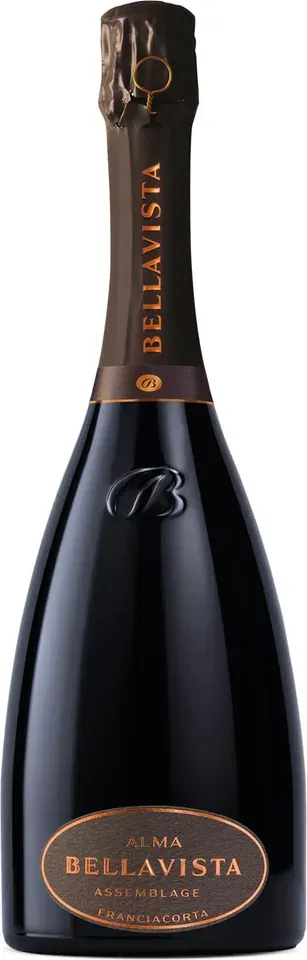
Bellavista Alma Assemblage 3 Extra Brut
Region: Franciacorta, Lombardy
Tasting notes
- Lemon zest and citrus
- Mediterranean flowers
- Brioche
- Dry, mineral finish

Ca' del Bosco Cuvée Prestige Edizione 48 Extra Brut
Region: Franciacorta, Lombardy
Tasting notes
- Peach
- Citrus
- Almond
- Fresh and precise
Conclusion
Bellavista Alma is no longer just a good Franciacorta Brut. As a numbered Extra Brut edition, it has become a serious, dry sparkling wine that can sit next to many Champagnes.
For more on Italian bubbles, read our comparison of Prosecco and Franciacorta. If you prefer the French original, see our Veuve Clicquot Yellow Label review.
Frequently asked questions
What does "Assemblage 3" mean on Bellavista Alma?
It is an edition number, not a vintage. Since Bellavista turned Alma into a yearly edition, each release is built around one base harvest plus reserve wines from older years, and gets a new number. Assemblage 3 is the edition that followed Assemblage 2, which was based on the 2022 harvest.
Is Bellavista Alma Assemblage dry?
Yes, it is an Extra Brut, the category that allows 0 to 6 grams of sugar per litre under EU rules. The previous edition, Assemblage 2, had a dosage of only 2 g/l according to the producer. The producer had not yet published the figure for Assemblage 3 in October 2026.
Is Franciacorta as good as Champagne?
Franciacorta is made with the same method as Champagne, with the second fermentation in the bottle, and its rules ask for at least 18 months on the lees for a non-vintage wine, longer than Champagne's 15. The style is often riper and softer because Lombardy is warmer. Top Franciacorta like Bellavista Alma can stand next to many Champagnes that cost more.
How we put this article together
We have not tasted every bottle we mention. Tasting notes and scores come from the sources we name: the producer's technical sheet, the retailer's listing or a critic, always credited.
Prices are indicative. In our tables, € means up to about €25, €€ about €25–50 and €€€ above €50, based on what these wines typically cost in European shops. When a review quotes a price, it is the price we saw on the retailer's page on the date shown. Check the current price and availability before you buy.
Shop links may earn us a commission at no extra cost to you. No retailer pays to be included, and a commission never decides what we recommend. How we work with retailers