Wine Guide
Prosecco vs Franciacorta: Which Italian Sparkling to Buy?
Prosecco vs Franciacorta: grapes, tank vs traditional method, taste, price and food pairings. Find the right Italian sparkling wine for any occasion.
 By Leandro ScarpattiPublished on
Advertising: this article contains links to online shops that may be affiliate links. If you buy through them, we may earn a commission, at no extra cost to you. How we work with retailers
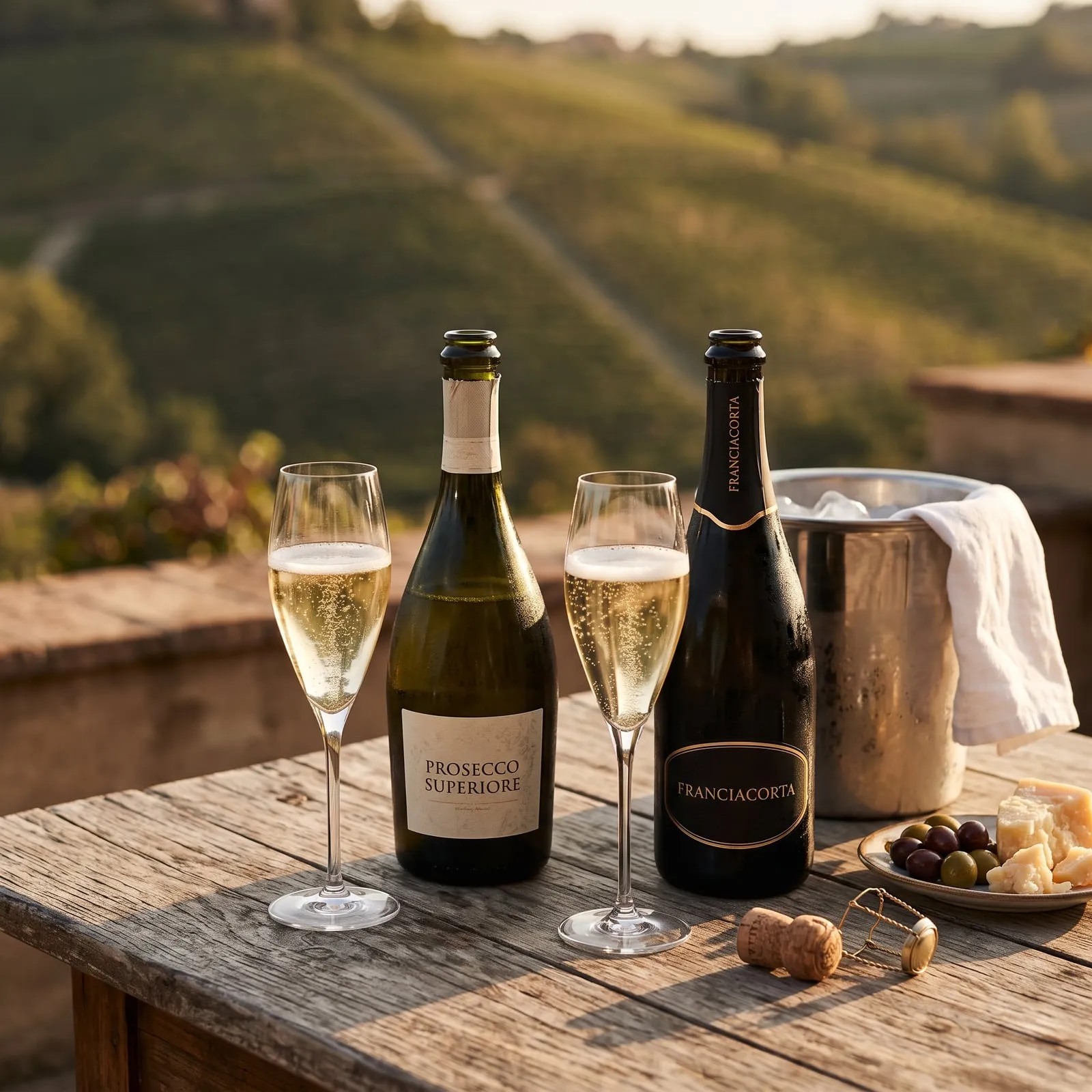
The short answer: Prosecco is a fresh, fruity sparkling wine from the Veneto and Friuli, made mainly from Glera and fermented in tanks (the Charmat or Martinotti method). Franciacorta comes from Lombardy, is made from Chardonnay and Pinot Nero by the traditional method, and must rest at least 18 months on its lees. Prosecco is lighter and cheaper (€ price tier); Franciacorta is more complex, creamy and age-worthy (€€ to €€€).
Both are Italian, both are dry in most versions, and both are excellent. But they are built in completely different ways.
One is about bright fruit and easy drinking. The other is about texture, depth and the slow work of yeast in the bottle.
Method: tank vs bottle
The way the bubbles are made is the single biggest difference between these two wines.
Prosecco uses the Charmat method, which Italians call the Metodo Martinotti. The base wine undergoes its second fermentation in a large pressurised steel tank (autoclave), then is filtered and bottled under pressure. The process usually takes weeks, not years. This protects the floral, fruity aromas of Glera.
Franciacorta uses the metodo classico, the same as Champagne. The second fermentation happens inside each bottle. The wine then rests on the dead yeast cells (lees), which slowly release brioche, toast and nutty notes and give a finer, creamier mousse.
What the rules say
| Prosecco | Franciacorta | |
|---|---|---|
| Appellations | Prosecco DOC; Conegliano Valdobbiadene Prosecco Superiore DOCG; Asolo Prosecco DOCG | Franciacorta DOCG |
| Region | Veneto and Friuli Venezia Giulia | Lombardy, near Lake Iseo (Brescia) |
| Main grapes | Glera (at least 85%) | Chardonnay, Pinot Nero; Pinot Bianco (max 50%) and Erbamat (max 10%) allowed |
| Method | Tank (Charmat / Martinotti) | Bottle (traditional method) |
| Minimum time on lees | None required | 18 months (non-vintage); 24 months (Satèn and Rosé); 30 months (Millesimato); 60 months (Riserva) |
| Price tier | € | €€–€€€ |
At the top of the Prosecco pyramid sits the hilly zone of Conegliano Valdobbiadene. Its steep slopes give wines with more finesse and minerality than the flatland DOC. The single hill of Cartizze is the most prized cru.
Franciacorta also has its own specialities. Satèn is a blanc de blancs (white grapes only) bottled at lower pressure, which makes it particularly silky.
How they taste
Prosecco smells of green apple, pear, white peach and acacia flowers. The bubbles are frothy and lively. The body is light and the finish clean.
Many Proseccos are labelled Extra Dry, which, confusingly, is slightly sweeter than Brut. If you prefer a drier glass, look for Brut or Extra Brut.
Franciacorta is more layered. Expect ripe citrus, yellow apple and white flowers, plus brioche, bread crust and toasted almond from the lees. The mousse is fine and persistent, and the texture is creamy.
Compared with Champagne, Franciacorta is often a touch riper and rounder, with slightly softer acidity.
Side-by-side comparison
| Pros | Cons |
|---|---|
| Pros: Fresh green apple, pear and white flowers from Glera | Cons: Tank fermentation gives little of the bready, autolytic complexity |
| Pros: Light, frothy and easy to drink, perfect for aperitivo and spritz | Cons: Bubbles are coarser and fade faster in the glass |
| Pros: Excellent value: good DOCG bottles are in the € price tier | Cons: Best drunk young; not built for cellaring |
| Pros | Cons |
|---|---|
| Pros: Bottle fermentation with at least 18 months on lees (30 for Millesimato, 60 for Riserva) | Cons: Costs two to three times more than most Prosecco |
| Pros: Chardonnay and Pinot Nero give citrus, brioche and toasted almond | Cons: Less fruity and exuberant, which some aperitivo drinkers miss |
| Pros: Fine, creamy mousse that pairs with a full meal and ages well | Cons: Smaller production, so less easy to find outside Italy |
Which one to choose
Pick Prosecco for parties, brunch and aperitivo. It goes beautifully with light starters, fried snacks, sushi, prosciutto and melon. It is also the natural base for an Aperol Spritz or a Bellini.
Pick Franciacorta when the wine is the centre of attention, or when you need a sparkling wine that can carry a meal. Try it with risotto, seafood, fried fish, Parmigiano Reggiano or roast chicken.
Serve Prosecco well chilled, around 6–8 °C. Serve Franciacorta slightly warmer, at 8–10 °C, in a tulip-shaped white wine glass rather than a narrow flute, so its aromas can open up.
Where to buy
Instead of pushing a single label, we link to the full Prosecco Superiore and Franciacorta selections on Vino.com, so you can compare producers, styles and prices yourself.
Shop links may earn us a commission at no extra cost to you.
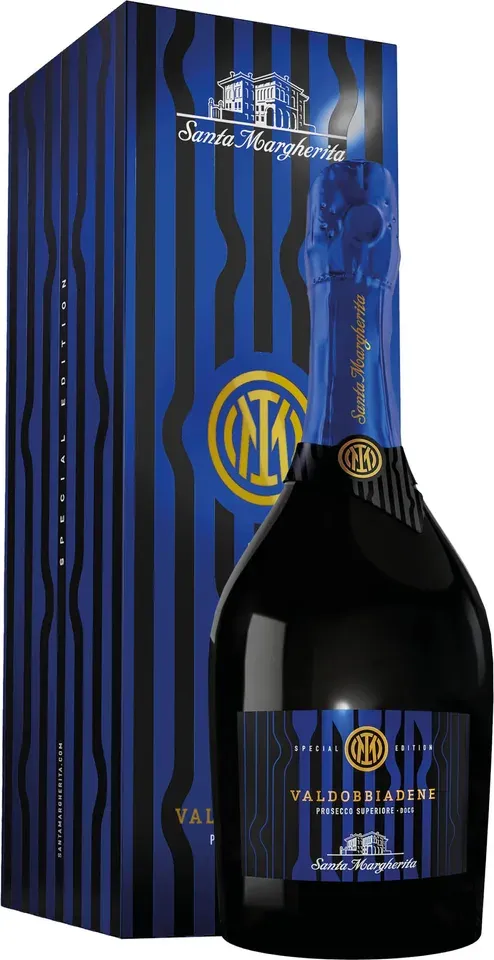
Conegliano Valdobbiadene Prosecco Superiore DOCG
Region: Valdobbiadene, Veneto
Tasting notes
- Green apple
- Pear and white peach
- Acacia blossom
- Crisp, dry finish
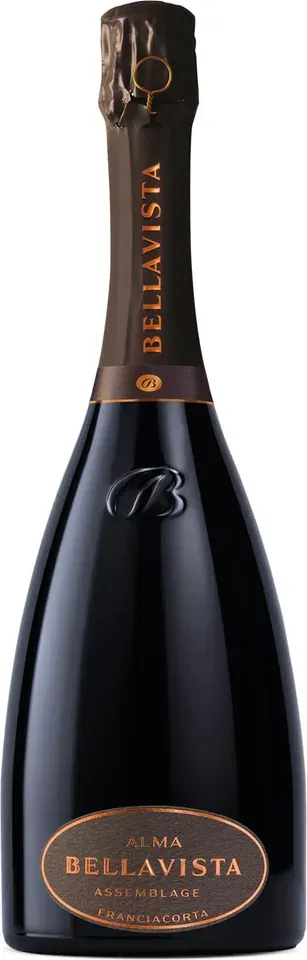
Franciacorta DOCG
Region: Franciacorta, Lombardy
Tasting notes
- Ripe citrus
- Brioche and bread crust
- Toasted almond
- Fine, creamy mousse
Conclusion
Prosecco and Franciacorta are not rivals so much as two different tools. Prosecco is the cheerful, fruit-driven sparkler for everyday celebrations and cocktails. Franciacorta is Italy’s answer to Champagne: slower to make, more complex and ready to partner a full dinner.
If you are unsure, open a Prosecco Superiore for the aperitivo and a Franciacorta with the main course. Tasting them in the same evening shows exactly what tank and bottle fermentation do to a wine.
Frequently asked questions
Is Franciacorta the Italian Champagne?
It is the closest Italian equivalent. Franciacorta is made by the same traditional method as Champagne, with a second fermentation in the bottle, and from similar grapes: mainly Chardonnay and Pinot Nero. The style is often a little riper and softer, reflecting the warmer climate of Lombardy.
Why is Prosecco cheaper than Franciacorta?
Prosecco gets its bubbles in large pressurised tanks over a few weeks, so it is faster and cheaper to make, and it comes from a much larger area. Franciacorta is fermented bottle by bottle and must age on its lees for at least 18 months, which ties up stock and labour for years.
How long can you keep Prosecco and Franciacorta?
Prosecco is made to be drunk young, ideally within 1 to 2 years of purchase, while its fruit is fresh. A good non-vintage Franciacorta keeps well for 2 to 4 years, and vintage (Millesimato) or Riserva bottles can age for a decade or more.
How we put this article together
We have not tasted every bottle we mention. Tasting notes and scores come from the sources we name: the producer's technical sheet, the retailer's listing or a critic, always credited.
Prices are indicative. In our tables, € means up to about €25, €€ about €25–50 and €€€ above €50, based on what these wines typically cost in European shops. When a review quotes a price, it is the price we saw on the retailer's page on the date shown. Check the current price and availability before you buy.
Shop links may earn us a commission at no extra cost to you. No retailer pays to be included, and a commission never decides what we recommend. How we work with retailers