Wine Guide
Bordeaux vs Burgundy: The Differences Between France's Great Wines
Bordeaux or Burgundy? Blends against single grapes, châteaux against climats: regions, taste, how to read the label, food pairings and price tiers.
 By Leandro ScarpattiPublished on
Advertising: this article contains links to online shops that may be affiliate links. If you buy through them, we may earn a commission, at no extra cost to you. How we work with retailers
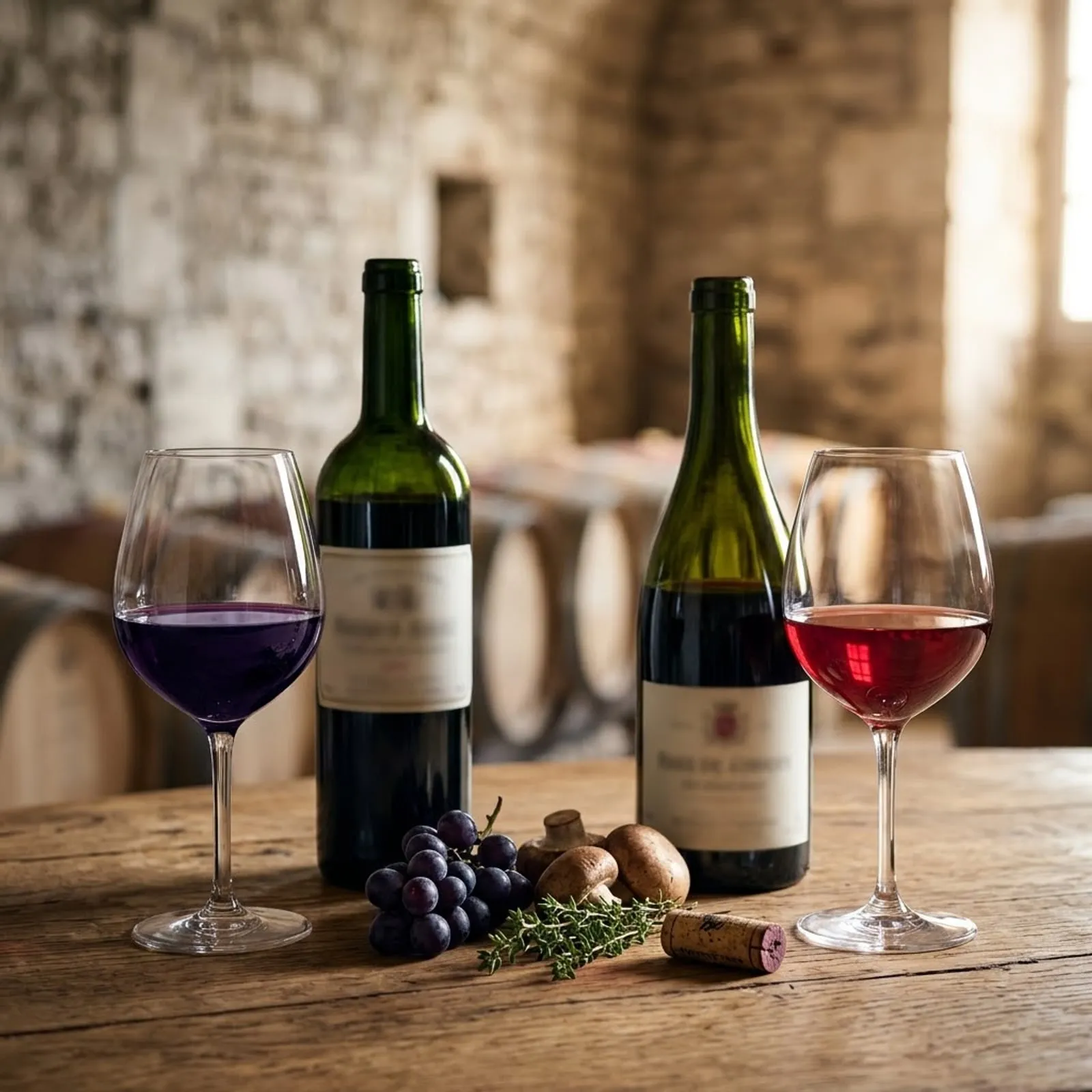
The short answer: Bordeaux and Burgundy are France’s two most famous wine regions, and they work in opposite ways. Red Bordeaux is a blend, mainly of Cabernet Sauvignon and Merlot, made by large estates called châteaux: full-bodied, with blackcurrant, cedar and firm tannins. Burgundy uses a single grape, Pinot Noir for reds and Chardonnay for whites, and focuses on small vineyard plots: lighter reds with red cherry, earth and silky tannins. Choose Bordeaux for steak and lamb, Burgundy for roast chicken, mushrooms and boeuf bourguignon.
For centuries the two regions have shaped how the world thinks about wine. Many grapes, bottle shapes and even classification systems elsewhere copy one or the other.
Here is what separates them, and how to choose.
The two regions at a glance
| Bordeaux | Burgundy (Bourgogne) | |
|---|---|---|
| Where | Southwest France, around the Gironde estuary and the Garonne and Dordogne rivers | East-central France, from Chablis down to the Mâconnais |
| Climate | Maritime, mild and humid | Continental, with cold winters and spring frosts |
| Red grapes | Blends of Cabernet Sauvignon, Merlot, Cabernet Franc, with some Petit Verdot and Malbec | Pinot Noir only |
| White grapes | Sauvignon Blanc and Sémillon (also the sweet Sauternes) | Chardonnay (and some Aligoté) |
| Who makes the wine | Châteaux: estates with one main wine | Domaines and négociants, often with many small plots |
| Classification | By château (such as the 1855 Médoc classification) | By vineyard: regional, village, Premier Cru, Grand Cru |
| Bottle shape | High, straight shoulders | Sloping shoulders |
| Entry price tier | € | €–€€ |
Bordeaux: the art of the blend
Bordeaux is a large region split in two by its rivers. On the Left Bank (Médoc and Graves), gravel soils suit Cabernet Sauvignon, which gives structured, long-lived wines such as Pauillac and Margaux. On the Right Bank (Saint-Émilion and Pomerol), clay and limestone suit Merlot, which gives rounder, plusher wines.
Each château blends its grapes to balance the vintage. Classic notes are blackcurrant, plum, cedar, graphite and tobacco, with firm tannins that soften over the years.
Bordeaux is also a region of great value: alongside famous châteaux, it produces plenty of affordable Bordeaux AOC and Bordeaux Supérieur, made for drinking young.
Burgundy: one grape, many places
Burgundy is the opposite approach. With only Pinot Noir and Chardonnay, what changes from bottle to bottle is the place. Burgundians call each precisely mapped vineyard a climat; in 2015 UNESCO added the climats of Burgundy to its World Heritage list.
The hierarchy goes from regional wines (Bourgogne AOC), to village wines (such as Gevrey-Chambertin or Meursault), to Premier Cru and, at the top, Grand Cru vineyards, which make only a tiny share of the region’s wine.
Red Burgundy is lighter in colour and body than Bordeaux, with red cherry, raspberry, violet, forest floor and mushroom, fresh acidity and silky tannins. White Burgundy ranges from the crisp, mineral Chablis to the rich, buttery Meursault.
Side by side
| Pros | Cons |
|---|---|
| Pros: Rich, structured reds with blackcurrant, cedar and tobacco | Cons: Young reds can feel tannic and oaky |
| Pros: Excellent entry-level value in the € tier | Cons: Famous châteaux are very expensive |
| Pros: Labels are easy to read: the château name is the brand | Cons: Vintage matters a lot |
| Pros | Cons |
|---|---|
| Pros: Elegant, aromatic reds that are easy with food | Cons: Many small producers and plots: labels are harder to read |
| Pros: The world's reference for Pinot Noir and Chardonnay | Cons: Good bottles start higher than Bordeaux |
| Pros: Huge variety from village to village | Cons: Grand Cru prices are among the highest in the world |
Which one with which food
| Dish | Best choice | Why |
|---|---|---|
| Grilled steak, ribeye | Bordeaux | Firm tannins and dark fruit stand up to the meat |
| Roast lamb | Bordeaux | A classic Left Bank match |
| Duck confit | Bordeaux | The fat softens the tannins |
| Boeuf bourguignon, coq au vin | Burgundy | Dishes born in the region, cooked with its wine |
| Roast chicken, mushroom dishes | Burgundy | Pinot Noir’s earthy, red-fruit notes match without overpowering |
| Fish in butter sauce | White Burgundy | Chardonnay’s body matches the sauce |
| Oysters | Chablis (white Burgundy) | Crisp and mineral |
For more ideas, see our wine with ribeye steak guide and our wine with cheese guide.
How to serve them
Serve red Bordeaux at 16–18 °C and decant young bottles for an hour. Red Burgundy is better a little cooler, at 14–16 °C, in a large, round glass that gathers its aroma. White Burgundy should be cool, not ice-cold: 10–12 °C.
Where to buy
Instead of pushing one bottle, we send you to the full Bordeaux and Burgundy selections on Vino.com, where you can compare producers, vintages and prices. The notes below describe each wine in its classic style.
Shop links may earn us a commission at no extra cost to you.

Bordeaux
Region: Bordeaux, France
Tasting notes
- Blackcurrant and plum
- Cedar and tobacco
- Firm tannins
- Full-bodied

Bourgogne
Region: Burgundy, France
Tasting notes
- Red cherry and raspberry
- Forest floor
- Silky tannins
- Fresh acidity
If you prefer Italian reds with the same ageing potential, read Barolo vs Brunello di Montalcino.
Verdict
Bordeaux and Burgundy both make some of the world’s greatest wines, but they speak different languages. Bordeaux is about the blend and the château: powerful, structured and often great value at entry level. Burgundy is about one grape and the place it grows: elegant, aromatic and fascinating, but harder to navigate.
If you like bold reds, start with Bordeaux. If you prefer lighter, more aromatic reds, start with a Bourgogne Pinot Noir.
Frequently asked questions
Is Bordeaux or Burgundy better for a beginner?
Entry-level Bordeaux is usually the easier start: a red Bordeaux AOC is affordable, fruity and widely available. Burgundy rewards curiosity, but its many villages and vineyards make the labels harder to read, and good bottles start at a higher price.
Why are Bordeaux and Burgundy bottles different?
By tradition, Bordeaux uses a straight bottle with high shoulders and Burgundy a bottle with sloping shoulders. The shapes became regional symbols, and today other regions copy them: wines made from Cabernet and Merlot often use the Bordeaux shape, while Pinot Noir and Chardonnay often use the Burgundy one.
Is white Burgundy the same as Chardonnay?
Almost all white Burgundy is made from Chardonnay, from Chablis in the north to the Mâconnais in the south. The label usually shows the place, not the grape, so a Meursault or a Chablis is a Chardonnay even if the word does not appear.
How we put this article together
We have not tasted every bottle we mention. Tasting notes and scores come from the sources we name: the producer's technical sheet, the retailer's listing or a critic, always credited.
Prices are indicative. In our tables, € means up to about €25, €€ about €25–50 and €€€ above €50, based on what these wines typically cost in European shops. When a review quotes a price, it is the price we saw on the retailer's page on the date shown. Check the current price and availability before you buy.
Shop links may earn us a commission at no extra cost to you. No retailer pays to be included, and a commission never decides what we recommend. How we work with retailers