Wine Guide
Veuve Clicquot Yellow Label Review: Is It Worth the Price?
Our Veuve Clicquot Yellow Label Brut review: blend, dosage, tasting notes, critic scores, food pairings and how it compares with Moët Brut Impérial.
 By Leandro ScarpattiPublished on
Advertising: this article contains links to online shops that may be affiliate links. If you buy through them, we may earn a commission, at no extra cost to you. How we work with retailers
The short answer: Veuve Clicquot Yellow Label is a reliable, Pinot Noir-driven Brut Champagne with pear, peach and brioche notes and a dosage of about 9 g/l. It cost around €46 in a gift box on Vino.com in October 2026. You pay a little extra for the famous name, but it is a safe, crowd-pleasing bottle for a celebration or a present.
The orange-yellow label is one of the most recognisable in the world of wine. Yellow Label is the house’s non-vintage Brut, the bottle most people think of when they hear “Veuve Clicquot”.
We have not tasted this bottle for this review. The tasting notes below come from the producer and from Vino.com, and the critic scores are attributed by name. Here is what is in the glass, what it costs and whether it deserves the hype.
The story behind the yellow label
The house was founded in Reims in 1772 by the father-in-law of Barbe-Nicole Ponsardin. Widowed at 27, she took over the business and became the “Veuve” (widow) Clicquot.
Her innovations shaped Champagne as we know it. According to the house, in 1816 she invented the riddling table, which made it possible to clear the sediment from the bottle and obtain a crystal-clear wine. In 1818 she made the first blended rosé Champagne, adding red wine from Bouzy instead of colouring it with elderberry.
The yellow label itself first appeared in 1877. Today Veuve Clicquot is part of the LVMH group.
| Feature | Veuve Clicquot Yellow Label Brut |
|---|---|
| Producer | Veuve Clicquot, Reims |
| Designation | Champagne AOC, Brut, non-vintage |
| Grapes | Pinot Noir 50–55%, Chardonnay 28–33%, Meunier 15–20% |
| Reserve wines | 25–45% of the blend |
| Crus | 50–60 different villages |
| Dosage | 9 g/l (Brut) |
| Time on the lees | At least 30 months (producer); Vino.com quotes 36 |
| Alcohol | 12% |
| Serving temperature | 8–10 °C (producer); Vino.com suggests 6–8 °C |
| Price | About €46 in a gift box on Vino.com (October 2026) |
How it is made
Yellow Label is a non-vintage Champagne. Each year the cellar master blends wines from the latest harvest with reserve wines from older years, so the style stays the same from bottle to bottle.
This is where Veuve Clicquot stands out. The house says it keeps a library of 400 to 500 reserve wines, some up to 30 years old, and that reserve wines make up 25% to 45% of Yellow Label. The cellar master since 2019 is Didier Mariotti, only the eleventh in the house’s history.
The bottles age in the chalk cellars (crayères) under Reims, at 10–12 °C. The producer says all its non-vintage wines spend at least 30 months on the lees, well above the 15-month legal minimum for non-vintage Champagne.
Tasting notes
These notes follow the producer’s description and the Vino.com product sheet.
Appearance: brilliant golden yellow, with a fine, persistent bead.
Nose: white and yellow fruit like pear, apple and peach, a hint of citrus (mandarin, grapefruit), then brioche. Vino.com also notes Mirabelle plum and a touch of vanilla.
Palate: structured by Pinot Noir, with pear, peach and pastry, and a hint of dried fruit from the time on the lees. Vino.com describes lively acidity and a long finish of hazelnut and toasted bread.
The result, on paper, is a Champagne with more body than many non-vintage Bruts: generous rather than razor-sharp.
What the critics say
Yellow Label is a non-vintage blend that changes slightly with each release, and the scores below do not say which release was tasted. Treat them as a range rather than a verdict on the bottle in the shop today.
The producer quotes Decanter and Bettane+Desseauve at 94/100, and Wine Spectator and Wine Enthusiast at 90/100. On Vino.com, the gift-box edition shows Wine Spectator and James Suckling at 91/100. On its Vino.com page it also has an average rating of 4.8 out of 5 from more than 4,300 customers.
Veuve Clicquot vs Moët & Chandon
The obvious rival is Moët & Chandon Brut Impérial, the other best-selling non-vintage Champagne. Both are blends of the three Champagne grapes from large houses owned by the same group.
| Pros | Cons |
|---|---|
| Pros: Pinot Noir-led: more body and structure than many Bruts | Cons: You pay a premium for the brand: about €46 (October 2026) |
| Pros: Large share of reserve wines for a consistent style | Cons: Non-vintage: not a Champagne to keep for years |
| Pros: Iconic label, an easy gift that everyone recognises | Cons: Less distinctive than grower Champagnes at a similar price |
| Pros | Cons |
|---|---|
| Pros: Fresh, balanced and very easy to like | Cons: Lighter and less structured than Yellow Label |
| Pros: About €40 in a gift box on Vino.com (October 2026) | Cons: Just as common: not a surprising choice |
| Pros: At least 24 months on the lees, according to Vino.com | Cons: Also a non-vintage, best drunk young |
If you like a rounder, fuller Champagne, Veuve Clicquot is the better match. If you prefer something lighter and want to save a few euros, the Moët does the job.
Food pairings
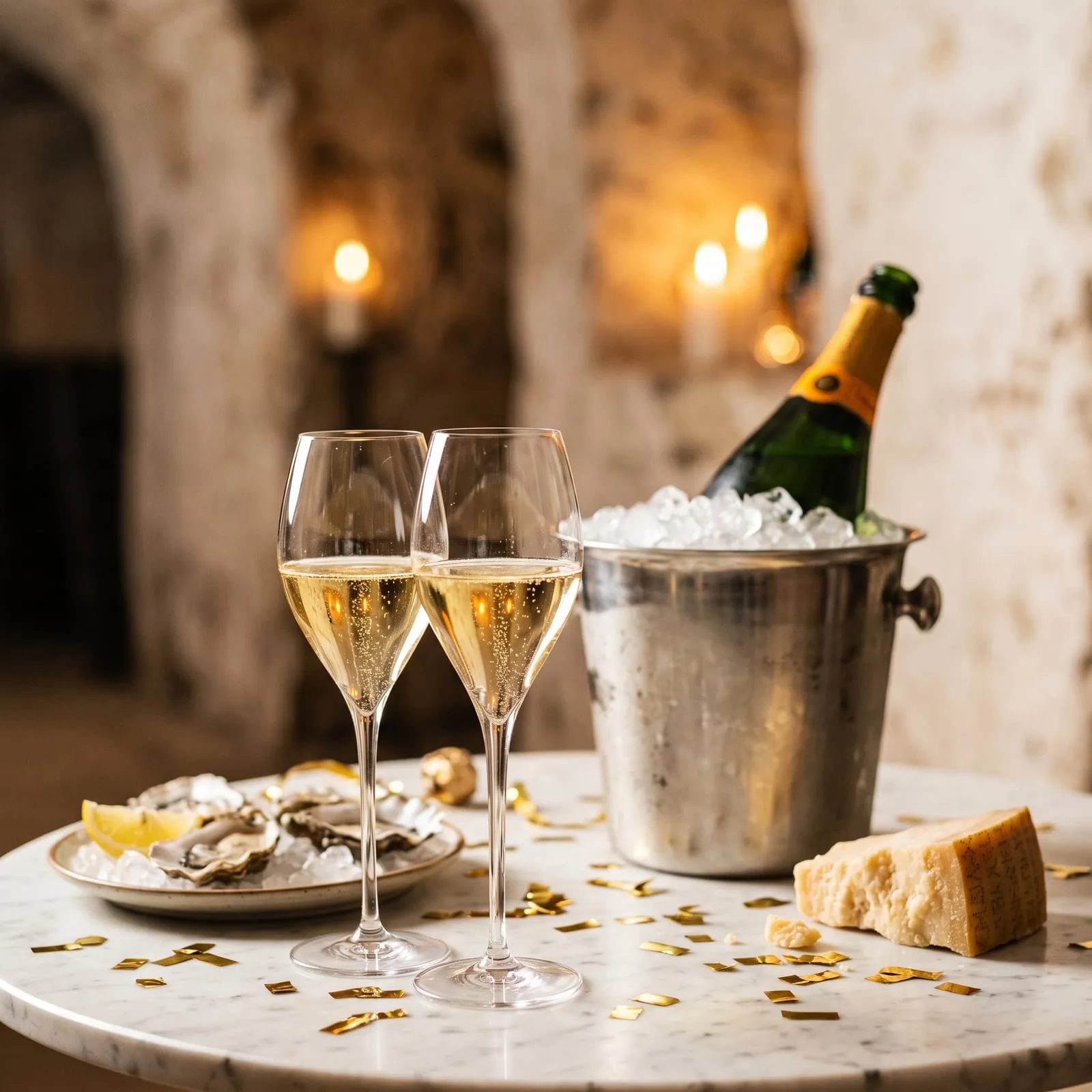
Yellow Label is a natural aperitif, but its structure lets it carry a meal. Vino.com suggests raw fish, smoked salmon, seafood, seafood risotto and flakes of aged Parmigiano Reggiano.
The producer goes more modern: maki, tartare, carpaccio, crisp salads, a vegetable stir-fry and even a burger with caramelised onions and cheddar. Salty, fried and crunchy food works very well with Champagne.
Serve it chilled, between 8 and 10 °C, in a tulip glass rather than a narrow flute, so the aromas have room to open.
Our verdict
Veuve Clicquot Yellow Label is a well-made, consistent Champagne with more Pinot Noir weight than most of its rivals. The producer’s notes, the critics’ range of 90–94 points and thousands of customer ratings all point the same way: it does exactly what you expect.
Is it the best value in Champagne? No. On Vino.com, Taittinger Brut Prestige and Pommery Brut Royal cost about €6 less in October 2026. But if you want a famous bottle for a toast, a birthday or a gift, Yellow Label is a safe choice that rarely disappoints.
Our recommendations
The Yellow Label itself, in its gift box, and its classic rival from Moët & Chandon.
Shop links may earn us a commission at no extra cost to you.

Veuve Clicquot Yellow Label Brut (gift box)
Region: Champagne, France
Tasting notes
- Pear and peach
- Brioche
- Pinot Noir structure
- Fine, persistent bead

Moët & Chandon Brut Impérial (gift box)
Region: Champagne, France
Tasting notes
- Balanced style
- Lively freshness
- Fine bubbles
- Great aperitif
Conclusion
Yellow Label is not a hidden gem, and it does not pretend to be. It is a dependable, generous Champagne with a story that goes back to one of the most remarkable women in wine history.
Buy it for the occasion and the name, drink it young and well chilled, and keep it away from the back of the cellar. For a sparkling wine with Italian roots, see our comparison of Prosecco and Franciacorta, and for the festive table, our Christmas dinner wine guide.
Frequently asked questions
Is Veuve Clicquot Yellow Label sweet or dry?
It is dry. Yellow Label is a Brut Champagne with a dosage of about 9 grams of sugar per litre, according to the producer. That is inside the Brut category (under 12 g/l): you notice ripe fruit and a touch of richness, but it does not taste sweet.
What is the difference between Veuve Clicquot and Moët & Chandon?
Both are non-vintage Brut Champagnes from big houses, blended from Pinot Noir, Chardonnay and Meunier. Veuve Clicquot Yellow Label leans on Pinot Noir (50–55%), which gives it more body and structure. Moët Brut Impérial is usually described as fresher and fruitier. On Vino.com in October 2026 the Moët cost about €6 less.
How long does Veuve Clicquot Yellow Label keep?
It is made to be drunk young. The producer gives it an ageing potential of 3 to 5 years, and Vino.com says it keeps its qualities for up to four years. Store it lying down, in a cool, dark place, and chill it before serving.
How we put this article together
We have not tasted every bottle we mention. Tasting notes and scores come from the sources we name: the producer's technical sheet, the retailer's listing or a critic, always credited.
Prices are indicative. In our tables, € means up to about €25, €€ about €25–50 and €€€ above €50, based on what these wines typically cost in European shops. When a review quotes a price, it is the price we saw on the retailer's page on the date shown. Check the current price and availability before you buy.
Shop links may earn us a commission at no extra cost to you. No retailer pays to be included, and a commission never decides what we recommend. How we work with retailers