Wine Guide
Etna Wine Guide: Etna Rosso, Etna Bianco and the Vineyards of the Volcano
What is Etna wine? A guide to Sicily's volcano wines: Etna Rosso from Nerello Mascalese, Etna Bianco from Carricante, the contrade, food pairings and prices.
 By Leandro ScarpattiPublished on
Advertising: this article contains links to online shops that may be affiliate links. If you buy through them, we may earn a commission, at no extra cost to you. How we work with retailers
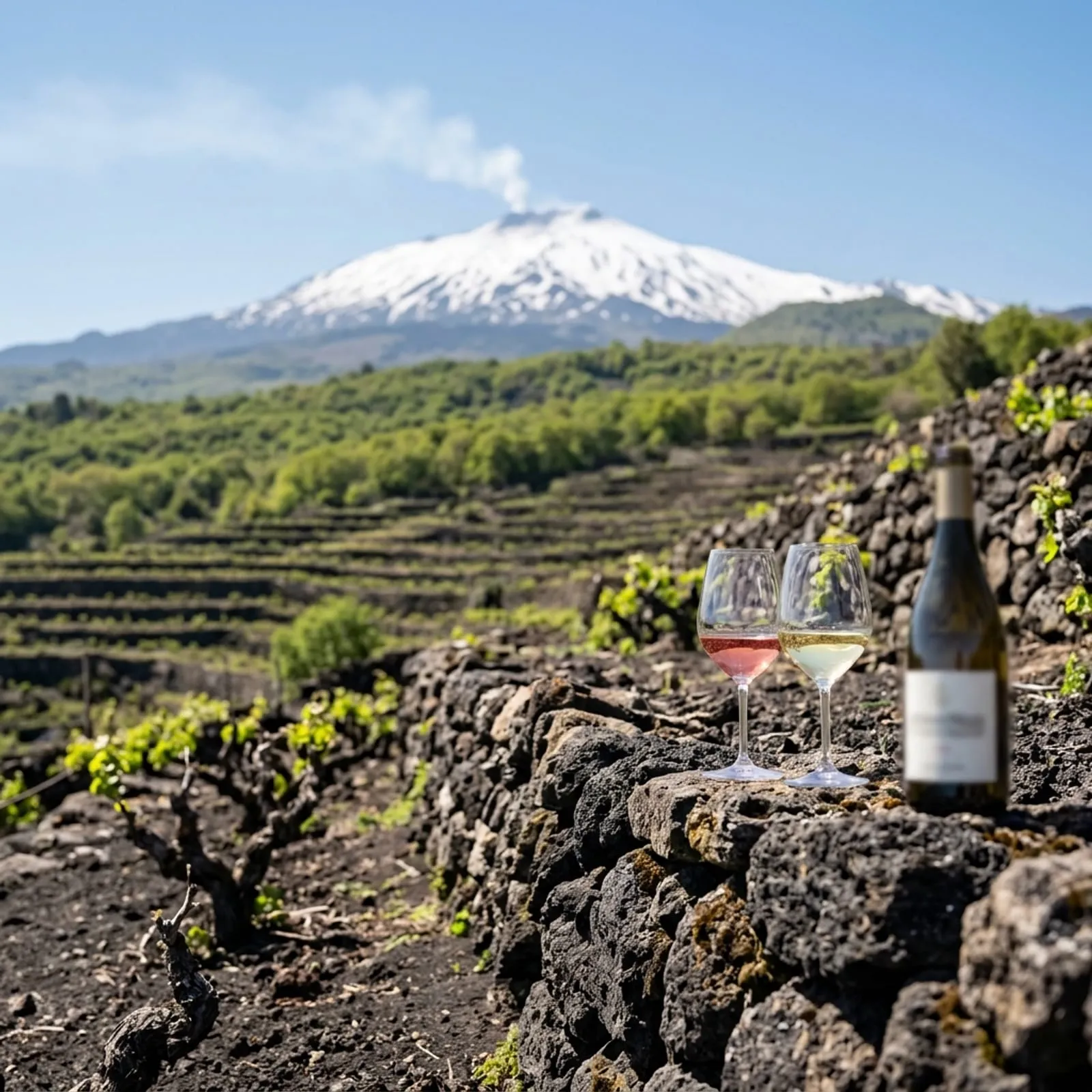
The short answer: Etna wine comes from the slopes of Mount Etna, the active volcano in eastern Sicily. Etna Rosso is made mainly from Nerello Mascalese and is pale, perfumed and mineral, often compared with red Burgundy. Etna Bianco is made mainly from Carricante and is crisp, citrusy and salty. The vineyards climb to over 1,000 metres on black lava soils, and that mix of altitude and volcano is what makes the wines so distinctive.
Mount Etna is Europe’s tallest active volcano, and it erupts regularly. It seems an unlikely place for vineyards, yet people have grown grapes on its slopes for centuries.
In the last twenty years, Etna has become one of the most talked-about wine regions in Italy. Here is what you need to know.
Why Etna wines are special
Three things make Etna different from the rest of Sicily:
- Altitude. The vineyards of the Etna DOC range from about 450 to over 1,000 metres above sea level. Days are sunny, but nights are cool, so the grapes keep their acidity and aromas.
- Volcanic soils. Black, sandy soils of lava and ash give the wines a mineral, sometimes smoky character. Some very old vines still grow on their own roots, because phylloxera, the pest that destroyed European vineyards in the 19th century, struggles in these sandy soils.
- Old bush vines. Many vines are trained as small free-standing bushes (alberello), on narrow terraces held up by walls of lava stone.
The Etna DOC, created in 1968, was the first DOC in Sicily. It covers a crescent of land on the northern, eastern and southern slopes of the volcano. In 2023 the producers’ consortium voted to apply for DOCG status, the top tier of Italian wine law.
Etna Rosso: Nerello Mascalese
Etna Rosso must contain at least 80% Nerello Mascalese, often with a little Nerello Cappuccio. The best-known red wines come from the northern slope, around villages such as Randazzo, Castiglione di Sicilia and Passopisciaro.
In the glass, Etna Rosso is pale to medium ruby, with red cherry, raspberry, dried herbs, orange peel and a smoky, earthy edge. The tannins are firm but fine, and the acidity is high. It is not the dark, sun-baked red many people expect from Sicily.
That is why critics often compare it with Pinot Noir from Burgundy or with Nebbiolo from Piedmont. We include one in our list of the best Italian red wines under 50 euros, where it is one of the best values.
Etna Bianco: Carricante
Etna Bianco must contain at least 60% Carricante, usually blended with Catarratto. Etna Bianco Superiore needs at least 80% Carricante and can only come from the area of Milo, on the eastern slope, where vineyards reach 900 to 1,100 metres and the sea is close.
Carricante gives lean, high-acid white wines with lemon, green apple, white flowers and a salty, mineral finish. Young, they are crisp and refreshing; with a few years in bottle, the best develop honeyed and even petrol-like notes, which reminds some tasters of Riesling.
The Etna DOC also includes Etna Rosato, a pale rosé from Nerello Mascalese, and Etna Spumante, a traditional-method sparkling wine.
Etna wines at a glance
| Wine | Main grape | Where | Style | Price tier |
|---|---|---|---|---|
| Etna Rosso | Nerello Mascalese (at least 80%) | Mostly the northern slope | Pale, perfumed, mineral; fine tannins | €–€€ |
| Etna Rosso from a single contrada | Nerello Mascalese | A named district on the label | More precise and age-worthy | €€–€€€ |
| Etna Bianco | Carricante (at least 60%) | Eastern and southern slopes | Crisp, lemony, salty | €–€€ |
| Etna Bianco Superiore | Carricante (at least 80%) | Milo only | Taut, mineral, long-lived | €€–€€€ |
| Etna Rosato | Nerello Mascalese | All slopes | Pale, fresh, red fruit | € |
Prices are typical retail ranges in Europe and vary by producer and vintage. You can compare all styles in the Etna selection on Vino.com.
The contrade: Etna’s crus
On Etna, small differences matter. Lava flows from different eruptions created a patchwork of soils of different ages, and altitude can change by hundreds of metres within a few kilometres.
To capture this, the Etna DOC recognises named districts called contrade (singular contrada). Since 2011 more than 130 have been officially listed, and producers can put the name on the label. Think of them as the Etna version of Burgundy’s crus or Barolo’s MGA: the name tells you exactly where the grapes grew.
Pros and cons of Etna wines
| Pros | Cons |
|---|---|
| Pros: Elegant, fresh wines unlike any other in southern Italy | Cons: Single-contrada bottles from top producers can be expensive |
| Pros: Etna Rosso offers Burgundy-like finesse at a fairer price | Cons: Light colour and high acidity can surprise fans of big, dark reds |
| Pros: Etna Bianco is one of Italy’s best whites for seafood | Cons: Styles vary a lot between producers and altitudes |
Food pairings
Etna Rosso is a versatile red thanks to its acidity and fine tannins:
- Grilled or seared tuna and swordfish steaks, a Sicilian classic.
- Pasta alla Norma, with tomato, fried aubergine and salted ricotta.
- Mushroom dishes, roast chicken and pork.
- Grilled lamb and sausages.
Etna Bianco shines with the sea:
- Raw fish and crudo, oysters and prawns.
- Spaghetti with clams or sea urchin.
- Grilled fish with lemon and herbs.
For more ideas by type of food, see our food and wine pairing guide.
How to serve
Serve Etna Rosso slightly cool, at 15 to 17 °C. A young, structured Etna Rosso benefits from 30 to 60 minutes in a decanter. Serve Etna Bianco at 10 to 12 °C: not too cold, or you lose its aromas.
Most Etna Rosso and Etna Bianco are good within two to six years of the harvest. Single-contrada wines and Etna Bianco Superiore from good producers can age for ten years or more.
Another volcanic red: Aglianico
Etna is not the only volcano in Italian wine. On the mainland, Aglianico grows on the volcanic soils of Irpinia and Mount Vulture and makes darker, more powerful reds. Read more in our Aglianico wine guide.
Where to buy
Two ways to taste the volcano: an Etna Rosso and an Etna Bianco. The buttons take you to the Etna and Carricante selections on Vino.com, where you can compare producers, contrade and vintages.
Shop links may earn us a commission at no extra cost to you.
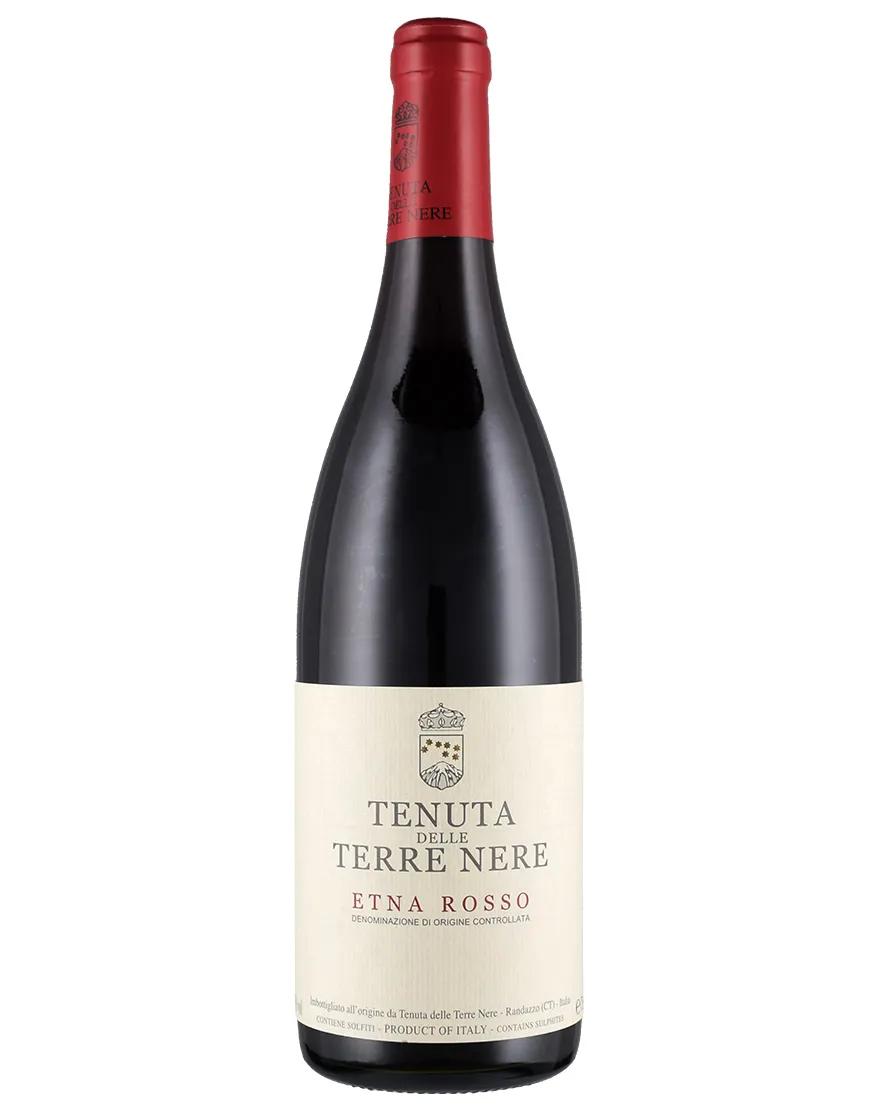
Etna Rosso DOC
Region: Sicily
Tasting notes
- Nerello Mascalese
- Red cherry and herbs
- Smoky, mineral edge
- Fine tannins

Etna Bianco DOC
Region: Sicily
Tasting notes
- Carricante
- Lemon and green apple
- Salty, mineral finish
- High acidity
Conclusion
Etna proves that Sicily is not only about sun and power. On the slopes of an active volcano, at altitudes up to 1,000 metres and more, Nerello Mascalese and Carricante make some of the most elegant wines in Italy.
Start with an Etna Rosso for dinner and an Etna Bianco for seafood. If you fall in love, look for single-contrada bottles and taste how much the volcano can change from one district to the next.
Frequently asked questions
What grape is Etna Rosso made from?
Etna Rosso is made from at least 80% Nerello Mascalese, a native Sicilian grape, with up to 20% Nerello Cappuccio. Small amounts of other local grapes are allowed. The result is a pale, perfumed red with red cherry, herbs, firm but fine tannins and high acidity.
Is Etna wine like Pinot Noir?
Many tasters compare Etna Rosso with red Burgundy (Pinot Noir) or with Nebbiolo, because it is pale, aromatic and elegant rather than dark and heavy. The comparison is about style, not grape: Nerello Mascalese has its own character, with smoky, mineral notes from the volcanic soils.
What is a contrada on an Etna wine label?
A contrada is a named district on the slopes of the volcano, similar to a cru. Since 2011 the Etna DOC has recognised more than 130 official contrade, and producers can print the name on the label when the grapes come from that area. Each contrada has its own altitude, exposure and lava soils, so wines from different contrade can taste quite different.
How we put this article together
We have not tasted every bottle we mention. Tasting notes and scores come from the sources we name: the producer's technical sheet, the retailer's listing or a critic, always credited.
Prices are indicative. In our tables, € means up to about €25, €€ about €25–50 and €€€ above €50, based on what these wines typically cost in European shops. When a review quotes a price, it is the price we saw on the retailer's page on the date shown. Check the current price and availability before you buy.
Shop links may earn us a commission at no extra cost to you. No retailer pays to be included, and a commission never decides what we recommend. How we work with retailers