Wine Guide
Aglianico Wine Guide: Taurasi, Aglianico del Vulture and the Barolo of the South
What is Aglianico? A guide to southern Italy's great red grape: Taurasi and Aglianico del Vulture, the volcanic soils, the style, food pairings and price tiers.
 By Leandro ScarpattiPublished on
Advertising: this article contains links to online shops that may be affiliate links. If you buy through them, we may earn a commission, at no extra cost to you. How we work with retailers
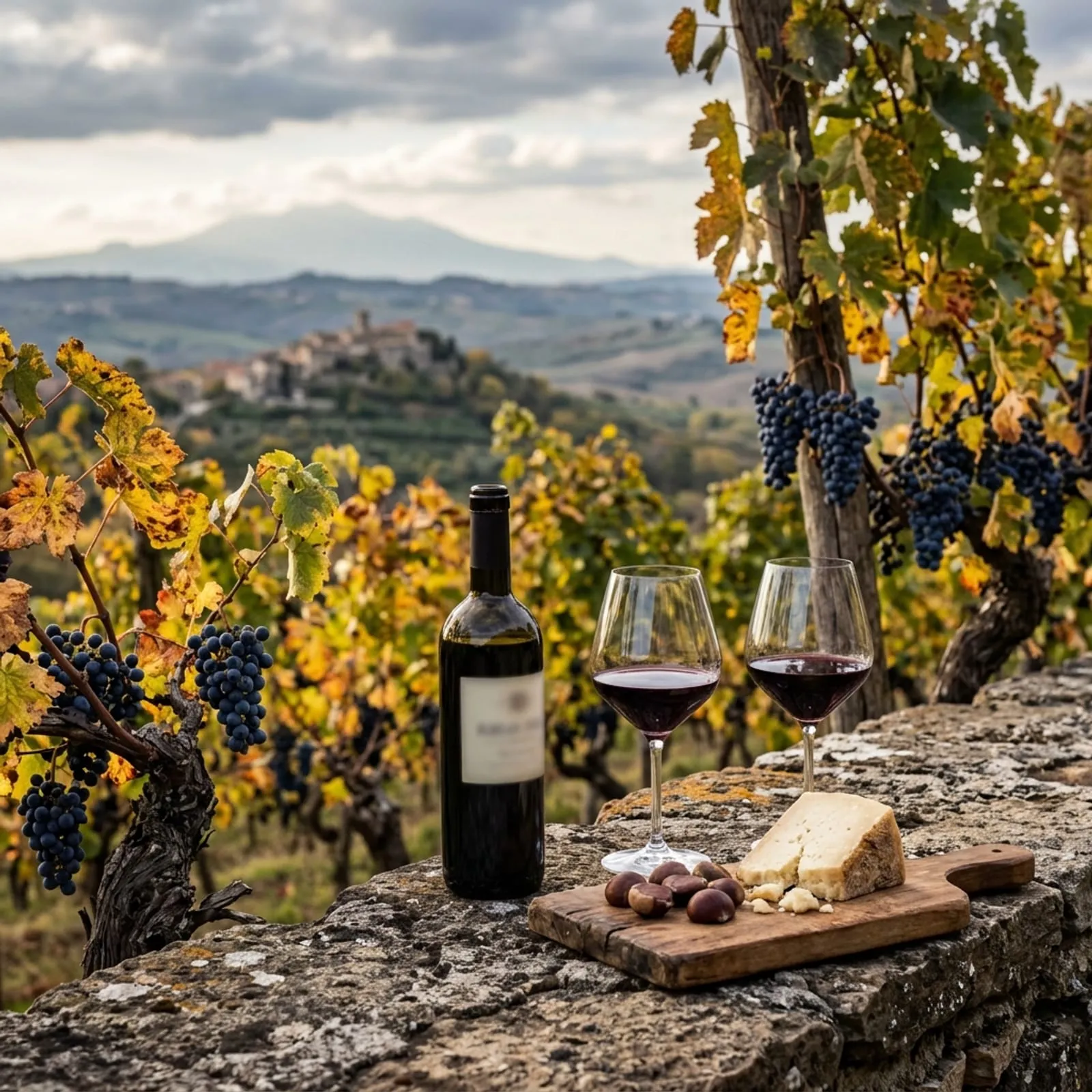
The short answer: Aglianico is the great red grape of southern Italy. It makes dark, full-bodied wines with firm tannins, high acidity and flavours of black cherry, plum, tobacco and smoke. The two classic appellations are Taurasi DOCG in Campania and Aglianico del Vulture in Basilicata, both on volcanic soils. Drink it with braised meat, lamb and aged cheese, and give the best bottles time.
When people think of great Italian reds, they usually think of Piedmont and Tuscany. But in the south, in the hills behind Naples and on the slopes of an old volcano in Basilicata, there is a grape that can stand next to Barolo and Brunello: Aglianico.
It is still undervalued, which is good news for anyone who likes serious red wine at a fair price.
What is Aglianico?
Aglianico is an ancient red grape grown mainly in Campania and Basilicata, with smaller plantings in Puglia, Molise and Calabria. Its name is often linked to the Italian word for “Greek”, although historians still debate where it comes from.
It ripens very late. In the hills of Irpinia, Aglianico is one of the last grapes picked in Italy, often at the end of October and sometimes in November. That long, slow ripening keeps the acidity high and builds deep colour and strong tannins.
In the glass, young Aglianico is dark ruby, with black cherry, plum, blackberry, violet and spice. With age it develops notes of tobacco, leather, dried herbs and smoke.
The main Aglianico appellations
| Appellation | Region | What to know | Style | Price tier |
|---|---|---|---|---|
| Taurasi DOCG | Campania (Avellino) | At least 85% Aglianico; at least 3 years of ageing, 1 in wood. Riserva: at least 4 years | Austere, tannic, long-lived | €€–€€€ |
| Aglianico del Vulture | Basilicata | DOC since 1971; the Superiore became DOCG in 2010 (at least 3 years, 12 months in barrel) | Ripe, dark, a little rounder | €–€€ |
| Aglianico del Taburno DOCG | Campania (Benevento) | Smaller appellation near Benevento | Firm, fresh, savoury | € |
| Irpinia Aglianico | Campania (Avellino) | Same area as Taurasi, younger and simpler wines | Fruity, ready sooner | € |
Prices are typical retail ranges in Europe and vary by producer and vintage. You can browse every style in the Aglianico selection on Vino.com.
Taurasi: the Barolo of the South
Taurasi takes its name from a village in Irpinia, the hilly inland area of the province of Avellino, east of Naples. It became a DOC in 1970 and a DOCG in 1993, one of the first in southern Italy.
The vineyards usually sit between 400 and 500 metres, on soils enriched by ash from ancient eruptions, including those of Vesuvius. The rules require at least 85% Aglianico and at least three years of ageing before release, with at least one year in wood. A Riserva ages at least four years.
For a long time, one family kept Taurasi alive abroad: until the early 1990s, Mastroberardino was practically the only winery exporting it. Today many producers make it, from small growers to larger names such as Feudi di San Gregorio.
Taurasi is austere when young, with powerful tannins and bright acidity. It needs time, and it rewards patience. We include one in our list of the best Italian red wines under 50 euros.
Aglianico del Vulture: the volcano of Basilicata
Mount Vulture is an extinct volcano in the north of Basilicata. Its slopes of volcanic tuff and ash give Aglianico a different accent: often riper, with dark fruit, spice and a smoky, mineral edge.
Aglianico del Vulture has been a DOC since 1971. In 2010 the Superiore version became a DOCG, with at least three years of ageing, including 12 months in barrel and 12 months in bottle. The Superiore Riserva needs at least five years.
Many Vulture wines are a little more approachable than Taurasi and slightly cheaper, which makes them a good place to start.
How Aglianico compares with other Italian reds
Aglianico is often compared with Nebbiolo, the grape of Barolo and Barbaresco: both have high acidity, strong tannins and the ability to age for decades. Nebbiolo is paler and more floral, with roses and red fruit; Aglianico is darker and more savoury. If you are curious about Nebbiolo, our guide to Barolo vs Barbaresco explains the two classics.
Compared with Primitivo, the other famous red of the south, Aglianico is much more structured and less jammy. We explain Primitivo in Primitivo vs Zinfandel.
And like Etna Rosso, Aglianico is a red of volcanic soils, but a much darker and more powerful one. Our Etna wine guide tells the story of Sicily’s volcano.
Pros and cons of Aglianico
| Pros | Cons |
|---|---|
| Pros: Serious, age-worthy reds at fairer prices than Barolo or Brunello | Cons: Young Taurasi can taste hard and tannic |
| Pros: Deep flavour: black cherry, plum, tobacco and smoke | Cons: The best bottles need years in the cellar |
| Pros: Excellent with braised meat, lamb and aged cheese | Cons: Too powerful for light dishes and fish |
Food pairings
Aglianico needs food with flavour and some fat to soften its tannins:
- Braised beef and slow-cooked meat, such as beef braised in red wine.
- Neapolitan ragù, the Sunday sauce cooked for hours with large pieces of meat.
- Roast lamb and goat, classic dishes of Irpinia and Basilicata.
- A grilled steak: see our guide to the best wine with ribeye steak.
- Aged cheeses such as Pecorino, Caciocavallo or Parmigiano Reggiano.
For more ideas by type of food, see our food and wine pairing guide.
How to serve and age it
Serve Aglianico at 16 to 18 °C. Decant a young Taurasi or Aglianico del Vulture Superiore for one to two hours: the air softens the tannins and opens the aromas.
Simple Irpinia or Campania Aglianico is ready within three to five years. A good Taurasi or Vulture Superiore often shows its best after five to ten years and can keep much longer.
Where to buy
Two ways to discover Aglianico: a Taurasi from Campania and an Aglianico del Vulture from Basilicata. The buttons take you to the full selections on Vino.com, where you can compare producers and vintages.
Shop links may earn us a commission at no extra cost to you.

Taurasi DOCG
Region: Campania
Tasting notes
- Aglianico
- Black cherry and violet
- Firm tannins
- Built to age

Aglianico del Vulture
Region: Basilicata
Tasting notes
- Aglianico
- Dark fruit and spice
- Smoky, volcanic edge
- Full body
Conclusion
Aglianico is southern Italy’s answer to Nebbiolo: a late-ripening, tannic, long-lived grape that turns volcanic soils into deep, savoury red wine. Start with an Aglianico del Vulture or an Irpinia Aglianico, then move on to a Taurasi when you have a special dinner, or a few years to wait.
It is one of the best-value great reds in Italy, and still one of the least known.
Frequently asked questions
Why is Taurasi called the Barolo of the South?
Because, like Barolo, it is a powerful red with firm tannins, high acidity and a long life in the bottle. Taurasi is made from Aglianico in the hills of Irpinia, in Campania, and must age at least three years before release. The nickname is a compliment, not a description of the taste: Aglianico is darker and more savoury than Nebbiolo.
What is the difference between Taurasi and Aglianico del Vulture?
Both are made from Aglianico, but in different regions. Taurasi DOCG comes from the province of Avellino, in Campania, and must contain at least 85% Aglianico. Aglianico del Vulture comes from the slopes of Mount Vulture, an extinct volcano in Basilicata, and is made from Aglianico only. Taurasi tends to be more austere; Vulture is often a little riper and rounder.
How long can you keep Aglianico?
Simple Aglianico, such as Irpinia or Campania IGT, is good within three to five years of the harvest. A good Taurasi or Aglianico del Vulture Superiore often needs five years to soften and can keep for ten to twenty years or more. Check the producer’s notes for each wine.
How we put this article together
We have not tasted every bottle we mention. Tasting notes and scores come from the sources we name: the producer's technical sheet, the retailer's listing or a critic, always credited.
Prices are indicative. In our tables, € means up to about €25, €€ about €25–50 and €€€ above €50, based on what these wines typically cost in European shops. When a review quotes a price, it is the price we saw on the retailer's page on the date shown. Check the current price and availability before you buy.
Shop links may earn us a commission at no extra cost to you. No retailer pays to be included, and a commission never decides what we recommend. How we work with retailers