Wine Guide
Rioja Crianza vs Reserva vs Gran Reserva: What Is the Difference?
Rioja Crianza, Reserva and Gran Reserva explained: minimum ageing in oak and bottle, how each one tastes, the label seals, food pairings and price tiers.
 By Leandro ScarpattiPublished on
Advertising: this article contains links to online shops that may be affiliate links. If you buy through them, we may earn a commission, at no extra cost to you. How we work with retailers
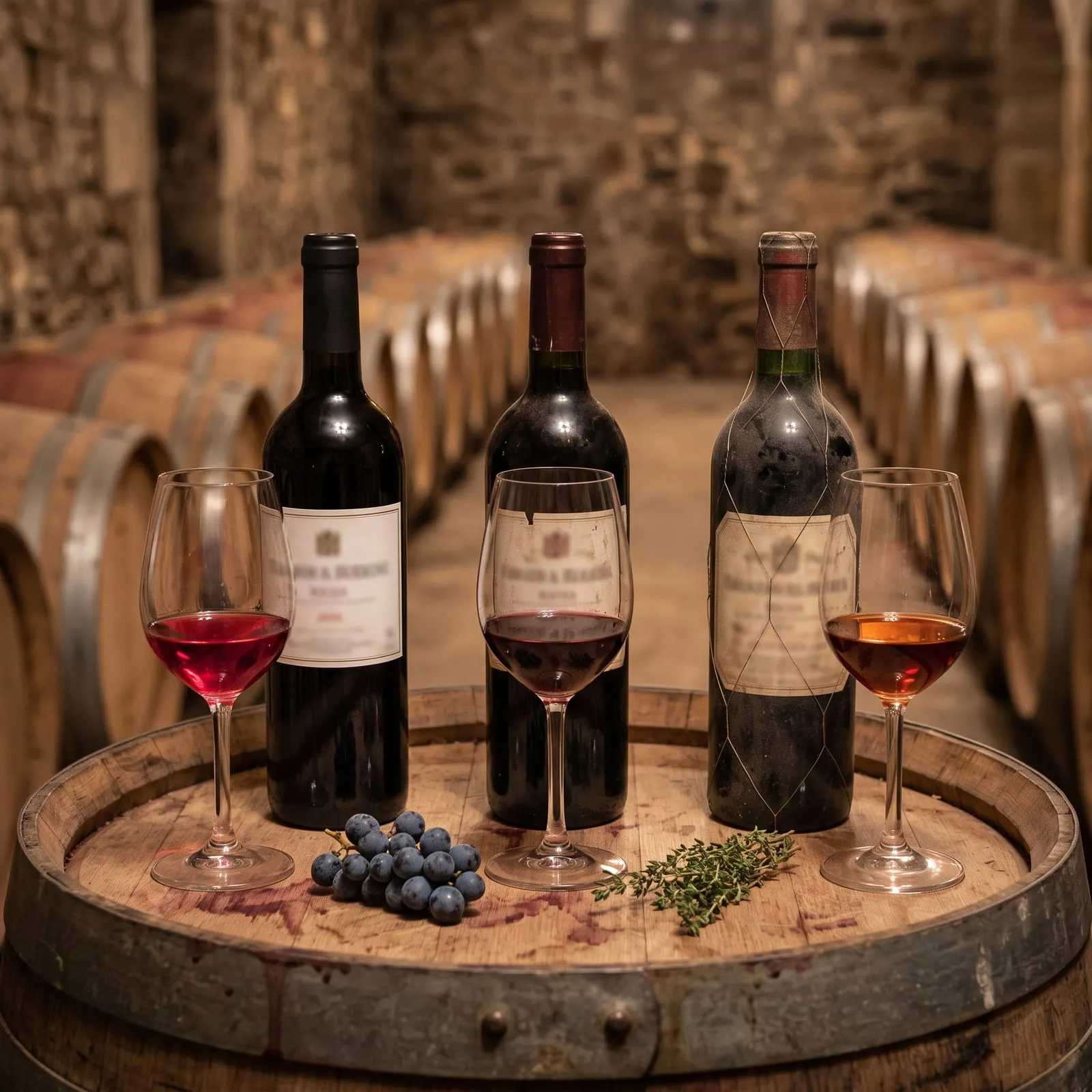
The short answer: the difference between Rioja Crianza, Reserva and Gran Reserva is how long the wine ages before release. A red Crianza ages at least 2 years (1 in oak), a Reserva at least 3 years (1 in oak and 6 months in bottle) and a Gran Reserva at least 5 years (2 in oak and 2 in bottle). Longer ageing brings softer tannins and notes of spice, leather and dried fruit.
Rioja is Spain’s best-known red wine region and, since 1991, its first Denominación de Origen Calificada (DOCa), the country’s top category.
Its ageing system is one of the easiest in Europe to read: the word on the label and the colour of the seal on the back tell you how long the wine spent in barrel and bottle.
Rioja in a nutshell
Rioja lies along the Ebro river in northern Spain, mostly in the region of La Rioja, with parts in the Basque Country (Álava) and Navarra. It has three zones: Rioja Alta, Rioja Alavesa and Rioja Oriental.
The main grape is Tempranillo, often blended with Garnacha, Graciano and Mazuelo. Ageing in 225-litre oak barrels is the region’s signature; American oak gives the classic notes of vanilla and coconut, French oak gives finer spice.
The ageing categories, one by one
Rioja with no ageing indication (a green seal, often called joven): young, fruity wines sold in their first or second year. The same category also includes some top wines whose ageing does not fit the official terms.
Crianza (red seal): at least 2 years of ageing, with at least 1 year in oak barrels. The fruit is still in front, with a touch of vanilla and spice from the wood.
Reserva (burgundy seal): at least 3 years of ageing, with at least 1 year in oak and 6 months in bottle. More layered and smoother, with spice and a longer finish.
Gran Reserva (blue seal): at least 5 years of ageing, with at least 2 years in oak and 2 years in bottle. Traditionally made only in the best vintages. Expect dried fruit, tobacco, leather and very fine tannins.
For white and rosé wines the minimums are shorter: Crianza needs 6 months in barrel, and Reserva and Gran Reserva need at least 6 months in barrel within 2 and 4 years of total ageing.
Since 2017 the label can also name a zone, a village or a single vineyard (Viñedo Singular), which tells you where the grapes come from.
Crianza vs Reserva vs Gran Reserva at a glance
| Crianza | Reserva | Gran Reserva | |
|---|---|---|---|
| Minimum ageing (red) | 2 years | 3 years | 5 years |
| Minimum in oak | 1 year | 1 year | 2 years |
| Minimum in bottle | None set | 6 months | 2 years |
| Back-label seal | Red | Burgundy | Blue |
| Style | Fresh fruit, light vanilla | Layered, smooth, spicy | Dried fruit, tobacco, leather |
| Food | Tapas, grilled meat, pizza | Roast lamb, roasts | Game, stews, aged cheese |
| Price tier | € | € to €€ | €€ to €€€ |
| Where to buy | Rioja on Vino.com | Rioja on Vino.com | Rioja on Vino.com |
Which Rioja with which food?
Crianza is the everyday choice. Its fruit and gentle oak suit tapas, chorizo, grilled meat, burgers and pizza.
Reserva is the classic match for roast lamb, a speciality of the region, and for roast pork or beef. It also works with a ribeye steak.
Gran Reserva needs dishes with depth: game, slow-cooked stews, mushrooms and aged cheeses such as Manchego. Open it a little ahead and serve it at about 16 to 18 °C.
Pros and cons of each category
| Pros | Cons |
|---|---|
| Pros: Fresh fruit with a light touch of oak | Cons: Less complex than Reserva and Gran Reserva |
| Pros: Very food-friendly | Cons: Not made for long ageing |
| Pros: The best value of the three |
| Pros | Cons |
|---|---|
| Pros: A balance of fruit, spice and smooth tannins | Cons: Oak can dominate in some styles |
| Pros: Ready to drink on release | Cons: Costs more than Crianza |
| Pros: Many good bottles at a fair price |
| Pros | Cons |
|---|---|
| Pros: The most complex and refined style | Cons: The highest price of the three |
| Pros: Aged by the winery, so it arrives ready to drink | Cons: The mature style is not for everyone |
| Pros: Can keep evolving in the bottle |
For a concrete example of a classic Reserva, read our Marqués de Riscal Reserva 2021 review.
Where to buy
These are the two styles we would start with: a Crianza for everyday meals and a Gran Reserva for a special dinner. The buttons take you to the full Rioja selection on Vino.com, where you can filter Crianza, Reserva and Gran Reserva by producer and vintage.
Shop links may earn us a commission at no extra cost to you.

Rioja Crianza
Region: Rioja, Spain
Tasting notes
- Red seal: 2 years of ageing
- Blackberry and raspberry
- Vanilla and spice
- Soft tannins

Rioja Gran Reserva
Region: Rioja, Spain
Tasting notes
- Blue seal: 5 years of ageing
- Dried fruit and plum
- Tobacco and cedar
- Silky tannins
Conclusion
Choose by the meal and by how much ageing you like. Crianza is the fresh, everyday Rioja; Reserva adds spice and smoothness for a roast; Gran Reserva is the mature, complex bottle for a special dinner.
The word on the front label and the colour of the seal on the back tell you which one you are buying.
Frequently asked questions
Is Rioja Reserva better than Crianza?
Not necessarily better, but different. Reserva must age at least three years, with at least one in oak and six months in bottle, so it is usually more complex and smoother. Crianza ages at least two years, with one in oak, and keeps more fresh fruit. Many people prefer a Crianza with everyday food.
How long can you keep a Rioja Gran Reserva?
Gran Reserva is released ready to drink, after at least five years of ageing, but good bottles can keep evolving for many years more. The ideal window depends on the producer and the vintage, so check the producer's notes. Store it lying down in a cool, dark place.
What does the seal on the back of a Rioja bottle mean?
It is the official back label of the Rioja Regulatory Council. Its colour shows the ageing category: green for wines with no ageing indication, red for Crianza, burgundy for Reserva and blue for Gran Reserva. It also carries a number that guarantees the origin of the bottle.
How we put this article together
We have not tasted every bottle we mention. Tasting notes and scores come from the sources we name: the producer's technical sheet, the retailer's listing or a critic, always credited.
Prices are indicative. In our tables, € means up to about €25, €€ about €25–50 and €€€ above €50, based on what these wines typically cost in European shops. When a review quotes a price, it is the price we saw on the retailer's page on the date shown. Check the current price and availability before you buy.
Shop links may earn us a commission at no extra cost to you. No retailer pays to be included, and a commission never decides what we recommend. How we work with retailers