Wine Guide
Rioja vs Ribera del Duero: Spain's Two Great Tempranillo Reds
Rioja or Ribera del Duero? Two Tempranillo reds from northern Spain compared: climate, oak, taste, ageing labels, food pairings and price tiers.
 By Leandro ScarpattiPublished on
Advertising: this article contains links to online shops that may be affiliate links. If you buy through them, we may earn a commission, at no extra cost to you. How we work with retailers
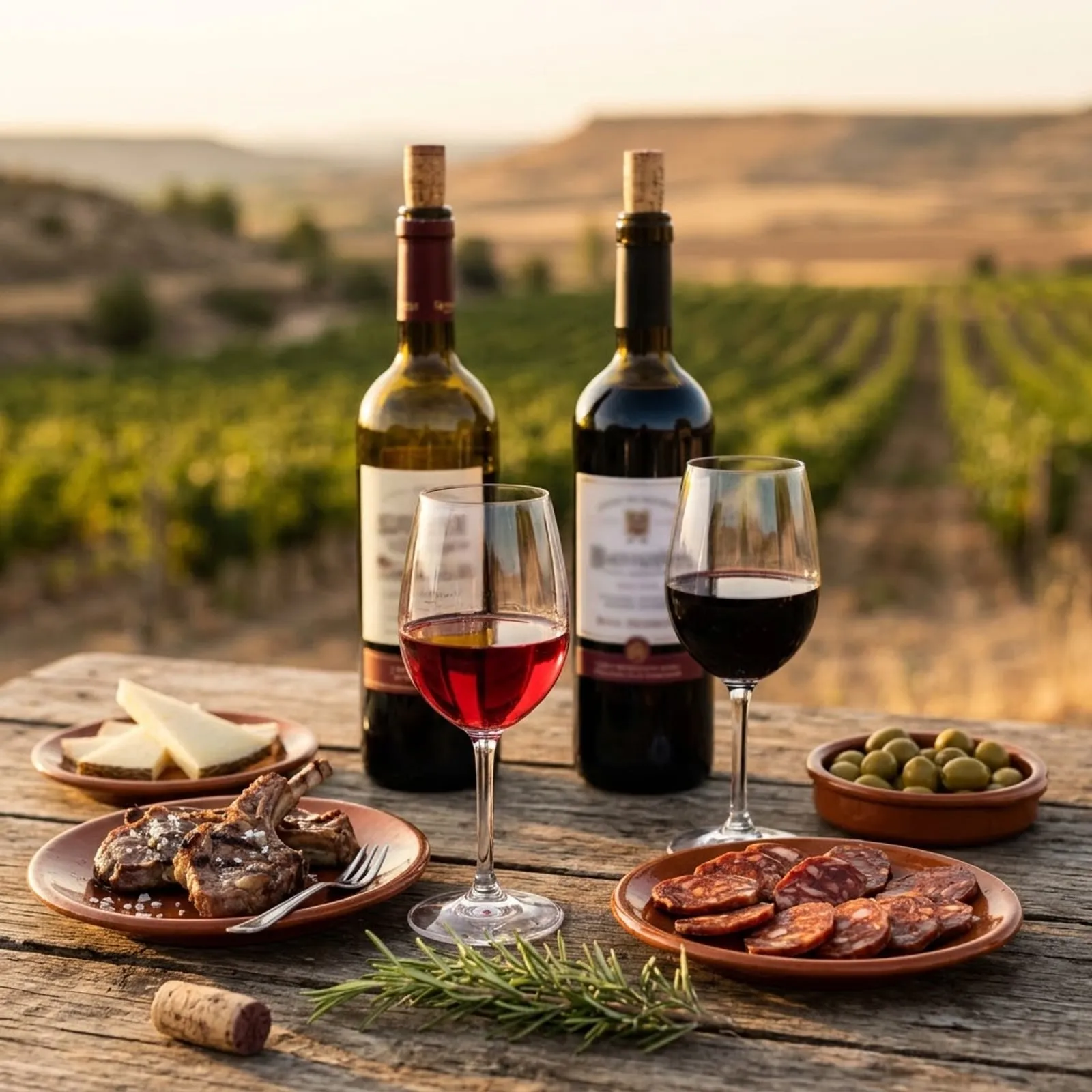
The short answer: Rioja and Ribera del Duero are Spain’s two most famous red wines, and both are made mainly from Tempranillo. Rioja, along the Ebro river, is often softer and more traditional, with red cherry, strawberry and the vanilla and spice of oak. Ribera del Duero, on a high plateau along the Duero river in Castilla y León, is darker and more powerful, with blackberry, plum, cocoa and firmer tannins. Choose Rioja for tapas and everyday meals, Ribera for roast lamb, steak and game.
Spaniards often order wine by the region, not the grape: “un Rioja” or “un Ribera”. The rivalry between the two is friendly but real, and it says a lot about how place shapes a wine.
Here is how they differ.
The two regions at a glance
| Rioja DOCa | Ribera del Duero DO | |
|---|---|---|
| Where | Ebro valley, northern Spain (La Rioja, Basque Country and Navarra) | Duero valley, Castilla y León, north-central Spain |
| Status | DOCa, Spain’s top category, since 1991 | DO since 1982 |
| Main grape | Tempranillo, with Garnacha, Graciano and Mazuelo | Tempranillo (Tinto Fino), at least 75% of red wines |
| Climate | Mixed Atlantic and Mediterranean influence | Extreme continental: hot days, cold nights, at around 700 to over 1,000 metres |
| Traditional oak | American oak (vanilla, coconut) | Often French oak (toast, cocoa) |
| Typical style | Red fruit, spice, soft tannins | Dark fruit, power, firm tannins |
| Price tier | €–€€ | €€ |
Rioja: tradition and balance
Rioja is Spain’s historic red wine region and its first DOCa. The classic style comes from blending Tempranillo with Garnacha for warmth, Graciano for freshness and Mazuelo for colour, then ageing in American oak barrels.
The result is a red with strawberry, cherry, vanilla, dill and sweet spice, medium to full body and soft tannins. Long-aged Gran Reserva adds leather, tobacco and dried fruit.
To understand the ageing labels, read our guide to Rioja Crianza vs Reserva vs Gran Reserva.
Ribera del Duero: power from the plateau
Ribera del Duero lies on a high plateau, among Europe’s highest major wine regions. Summer days are hot, but nights are cold, and frosts are a risk in spring and autumn. That big swing between day and night gives grapes with deep colour, ripe fruit and fresh acidity.
The region was made famous by Vega Sicilia, and later by Pesquera and Pingus. Its reds are often aged in French oak and are darker and more concentrated than Rioja: blackberry, black plum, liquorice, cocoa and coffee, with firm tannins that need food.
Side by side
| Pros | Cons |
|---|---|
| Pros: Soft, approachable and very food-friendly | Cons: The classic American oak style is not for everyone |
| Pros: Easy-to-read ageing labels and coloured seals | Cons: Simple young wines can lack depth |
| Pros: Great value from the € tier upward | Cons: Style varies a lot between traditional and modern producers |
| Pros | Cons |
|---|---|
| Pros: Deep, concentrated and powerful | Cons: Young wines can feel tannic and oaky |
| Pros: Excellent with roast meat and game | Cons: Usually a step higher in price: the €€ tier |
| Pros: Ages well thanks to firm tannins and fresh acidity | Cons: Less suited to light dishes and tapas |
Which one with which food
| Dish | Best choice | Why |
|---|---|---|
| Tapas, chorizo, jamón | Rioja | Soft tannins and red fruit don’t overpower small bites |
| Lamb chops on the grill | Rioja | A classic match in the region |
| Roast suckling lamb (lechazo) | Ribera del Duero | The signature dish of Castilla y León |
| Steak and barbecue | Ribera del Duero | Power and tannin for charred meat |
| Game and stews | Ribera del Duero | Dark fruit for rich sauces |
| Paella with meat, pizza | Rioja | A young Rioja or Crianza is versatile |
| Aged Manchego | Both | The salty, firm cheese softens tannins |
For more meat pairings, see our wine with ribeye steak guide.
How to serve them
Serve both at 16–18 °C. A young Ribera del Duero benefits from an hour in a decanter; an old Rioja Gran Reserva may have sediment, so pour it slowly or decant it carefully just before serving.
Where to buy
Instead of pushing one bottle, we send you to the full Rioja and Ribera del Duero selections on Vino.com, where you can compare producers, vintages and prices. The notes below describe each wine in its classic style.
Shop links may earn us a commission at no extra cost to you.

Rioja DOCa
Region: Rioja, Spain
Tasting notes
- Cherry and strawberry
- Vanilla and spice
- Soft tannins
- Medium to full body

Ribera del Duero DO
Region: Castilla y León, Spain
Tasting notes
- Blackberry and plum
- Cocoa and liquorice
- Firm tannins
- Full-bodied
For a specific Rioja bottle, read our Marqués de Riscal Reserva review.
Verdict
Rioja and Ribera del Duero show two faces of the same grape. Rioja is the softer, classic choice, with red fruit and oak spice, and works with almost any meal. Ribera del Duero is darker and more powerful, made for roast meat and colder evenings.
If you are new to Spanish wine, start with a Rioja Crianza. If you love bold reds, go straight to Ribera del Duero.
Frequently asked questions
Is Ribera del Duero better than Rioja?
Neither is better: they are two styles of Tempranillo. Ribera del Duero is usually darker, riper and more powerful; Rioja is usually softer, with more red fruit and the vanilla of oak. The producer and the ageing category matter more than the region.
Do Crianza and Reserva mean the same in Rioja and Ribera del Duero?
Yes. For red wines, both use the same minimums: Crianza at least 2 years of ageing with 1 in oak, Reserva at least 3 years with 1 in oak, and Gran Reserva at least 5 years with 2 in oak. Rioja adds a coloured seal on the back label for each category.
What is Tinto Fino?
Tinto Fino, or Tinta del País, is the local name for Tempranillo in Ribera del Duero. Over centuries on the high, cold plateau the grape adapted with thicker skins, which helps explain the deeper colour and firmer tannins of Ribera wines.
How we put this article together
We have not tasted every bottle we mention. Tasting notes and scores come from the sources we name: the producer's technical sheet, the retailer's listing or a critic, always credited.
Prices are indicative. In our tables, € means up to about €25, €€ about €25–50 and €€€ above €50, based on what these wines typically cost in European shops. When a review quotes a price, it is the price we saw on the retailer's page on the date shown. Check the current price and availability before you buy.
Shop links may earn us a commission at no extra cost to you. No retailer pays to be included, and a commission never decides what we recommend. How we work with retailers