Wine Guide
Amarone vs Ripasso: What Is the Difference and Which Should You Choose?
Amarone vs Ripasso: dried grapes vs a second fermentation on Amarone skins, plus alcohol, body, food pairings, serving tips and price tiers.
 By Leandro ScarpattiPublished on
Advertising: this article contains links to online shops that may be affiliate links. If you buy through them, we may earn a commission, at no extra cost to you. How we work with retailers
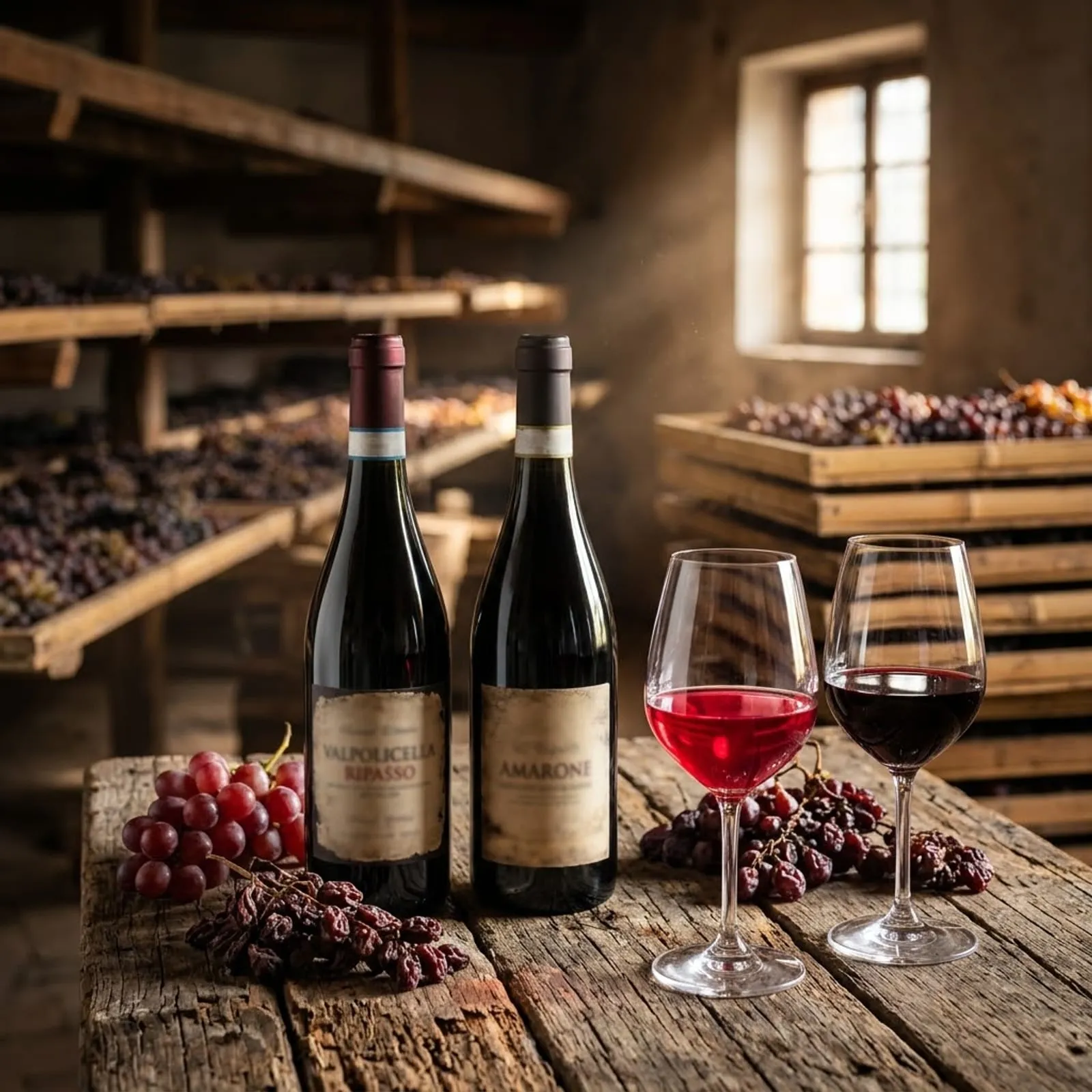
The short answer: Amarone and Ripasso come from the same grapes in Valpolicella, near Verona, but are made in different ways. Amarone is made from grapes dried for about three to four months, so it is full-bodied, rich and often 15 to 16% alcohol. Ripasso is a Valpolicella wine re-fermented on the leftover Amarone skins: it gains body and dried-fruit notes but stays fresher, lighter and cheaper. Choose Ripasso for everyday meals and Amarone for a special dinner.
Both wines come from the hills north of Verona, in the Veneto region of north-east Italy. They share the same grapes: mainly Corvina and Corvinone, with Rondinella and sometimes Molinara.
What changes is the method. And the method changes everything in the glass, from the alcohol to the price.
How Amarone is made
After the harvest, the best bunches are laid on racks or in crates in airy drying lofts called fruttai. They rest there for about three to four months. This drying process is called appassimento.
The grapes lose a large part of their water, often 30 to 40% of their weight, and the sugar, colour and flavour become concentrated. They are pressed in winter and fermented until the wine is dry.
The result is a powerful red with notes of dried cherry, plum, raisin, cocoa and spice. By law Amarone needs at least 14% alcohol, and many bottles reach 15 to 16%. It must age for at least two years before release, and four years for a Riserva. Amarone della Valpolicella has been a DOCG, Italy’s top category, since 2010.
The name comes from amaro, “bitter” in Italian. It marked the difference from the sweet Recioto, the older dried-grape wine of the area: Amarone was the version fermented until dry.
How Ripasso is made
Ripasso means “passed again”. The winery first makes a normal Valpolicella wine. Then, after the Amarone (or Recioto) has been pressed, it pours that young wine over the leftover skins, still rich in sugar, colour and tannin.
This starts a short second fermentation. The wine gains alcohol, body and some of the dried-fruit and spice character of Amarone, while keeping the fresh red cherry of Valpolicella.
Valpolicella Ripasso has had its own DOC since 2010. It needs at least 12.5% alcohol (13% for Ripasso Superiore, which must also age for at least one year), and most bottles sit around 13.5 to 14.5%. Its nickname, “baby Amarone”, is a fair summary.
Amarone vs Ripasso at a glance
| Valpolicella Ripasso | Amarone della Valpolicella | |
|---|---|---|
| Category | DOC | DOCG |
| Grapes | Corvina, Corvinone, Rondinella | Corvina, Corvinone, Rondinella |
| Method | Valpolicella re-fermented on Amarone skins | Grapes dried for about 3–4 months |
| Minimum alcohol | 12.5% (Superiore 13%) | 14% |
| Typical alcohol | 13.5–14.5% | 15–16% |
| Body | Medium to full | Full |
| Flavours | Red cherry, plum, a touch of raisin and spice | Dried cherry, raisin, cocoa, tobacco, spice |
| Minimum ageing | Superiore: 1 year | 2 years (Riserva 4) |
| Price tier | €–€€ | €€–€€€ |
| Where to buy | Ripasso on Vino.com | Amarone on Vino.com |
Prices are typical retail ranges for each category and vary by producer and vintage.
Which one with which food?
Ripasso is the easy, food-friendly choice. Its fresh acidity and medium body suit pasta with meat ragù, lasagne, pizza, burgers, grilled sausages and roast chicken. In Verona it is also the wine for a plate of local cheese such as a medium-aged Monte Veronese.
Amarone needs dishes with as much depth as the wine. Think beef braised in red wine, game, mushroom risotto, pastissada (Verona’s slow-cooked stew) and aged cheeses such as Parmigiano Reggiano or an old Monte Veronese. Many Veronese also drink it on its own after dinner, as a vino da meditazione, a wine to sip slowly.
Neither is a good match for fish or light salads: the body and alcohol cover delicate flavours. Amarone is also too precious and too strong for mulled wine. For that, see which wine to use for mulled wine.
Pros and cons of each
| Pros | Cons |
|---|---|
| Pros: A taste of the Amarone style for a fraction of the price | Cons: Less depth and length than a good Amarone |
| Pros: Fresh enough for everyday food, from pasta to pizza | Cons: Quality varies a lot between producers |
| Pros: Ready to drink young, with no need to decant |
| Pros | Cons |
|---|---|
| Pros: One of Italy's most concentrated and memorable reds | Cons: High alcohol, often 15 to 16% |
| Pros: Stands up to braises, game and strong cheese | Cons: Costs several times more than Ripasso |
| Pros: Good bottles can age for many years | Cons: Too powerful for light or everyday dishes |
How to serve them
Serve both at about 16 to 18 °C. On a warm day, 15 minutes in the fridge brings a bottle from room temperature down to the right point.
Ripasso can be opened and poured straight away. A young Amarone is better opened an hour or two ahead, or decanted, so the alcohol settles and the aromas open.
Ripasso is usually best within five to eight years of the harvest. A good Amarone often keeps evolving for ten years or more; check the producer’s notes for each wine. Both labels follow the Italian DOC and DOCG rules explained in our guide on how to read an Italian wine label.
Where to buy
Instead of a single label, these cards take you to the full Ripasso and Amarone selections on Vino.com, where you can filter by producer, vintage and price.
Shop links may earn us a commission at no extra cost to you.

Valpolicella Ripasso DOC
Region: Valpolicella, Veneto
Tasting notes
- Red cherry and plum
- A touch of raisin
- Spice
- Medium to full body

Amarone della Valpolicella DOCG
Region: Valpolicella, Veneto
Tasting notes
- Dried cherry and raisin
- Cocoa and tobacco
- Velvety tannins
- Full body
For a specific Amarone we like at a fair price, see the Masi Costasera in our list of the best Italian red wines under 50 euros. And for a Christmas roast, Amarone is one of the reds in our Christmas dinner wine guide.
Conclusion
Same grapes, same hills, two very different wines. Ripasso is the everyday Valpolicella with a little extra depth, perfect with pasta, pizza and grilled meat. Amarone is the slow, powerful wine of dried grapes for braises, game, aged cheese and special evenings.
If you are curious about Amarone but not ready to pay for it, start with a good Ripasso: it gives you a first taste of the style.
Frequently asked questions
Is Ripasso a "baby Amarone"?
In a way. Ripasso is a Valpolicella wine that is fermented a second time on the skins left over from Amarone, so it picks up some of Amarone's colour, body and dried-fruit flavour. It is lighter, fresher and lower in alcohol than Amarone, and it usually costs much less.
Is Amarone a sweet wine?
No. Amarone is a dry red wine, even though it is made from dried, very ripe grapes. The yeasts turn almost all the sugar into alcohol, which is why Amarone often reaches 15 to 16%. The ripe fruit and high alcohol can feel rich and almost sweet, but the sweet wine of the area is Recioto della Valpolicella.
Should you decant Amarone?
It helps. Opening a young Amarone an hour or two before dinner, or pouring it into a decanter, softens the alcohol and lets the aromas open up. Serve it at about 16 to 18 °C, not warmer, or the alcohol will stand out.
How we put this article together
We have not tasted every bottle we mention. Tasting notes and scores come from the sources we name: the producer's technical sheet, the retailer's listing or a critic, always credited.
Shop links may earn us a commission at no extra cost to you. No retailer pays to be included, and a commission never decides what we recommend. How we work with retailers